
While growing plants using hydroponics, I encountered a challenging situation: a prolonged power outage. This led to several negative consequences. First, I had to manually reconfigure my systems once power returned. More importantly, the lack of supplemental light and water aeration stunted plant growth.
To prevent this from happening again, I took action and installed a custom backup power system based on a LiFePO4 battery. Here is a detailed breakdown of my setup and how it ensures my garden’s survival.
My Hydroponic Garden
My indoor garden consists of various systems, primarily classic horizontal hydroponic setups where plants sit on a growing deck with roots partially submerged in a nutrient solution. Nearly every system utilizes a water pump and air stones for essential aeration.
My Current Inventory:
- AeroGarden: Harvest, Elite Slim, Bounty Basic, and Farm 12XL
- LetPot Max
- Mars Hydro & Spider Farmer setups
- iDOO 12 (2 units)
- Click and Grow Smart Garden 9
- Support Gear: Two air pumps and a circulation fan
In total, these devices have a combined power draw of 340 watts.
Why LiFePO4 is the Gold Standard
I built this backup system by carefully selecting high-quality, reliable components. While the initial investment wasn’t cheap, the peace of mind is worth every cent.
The Battery Bank
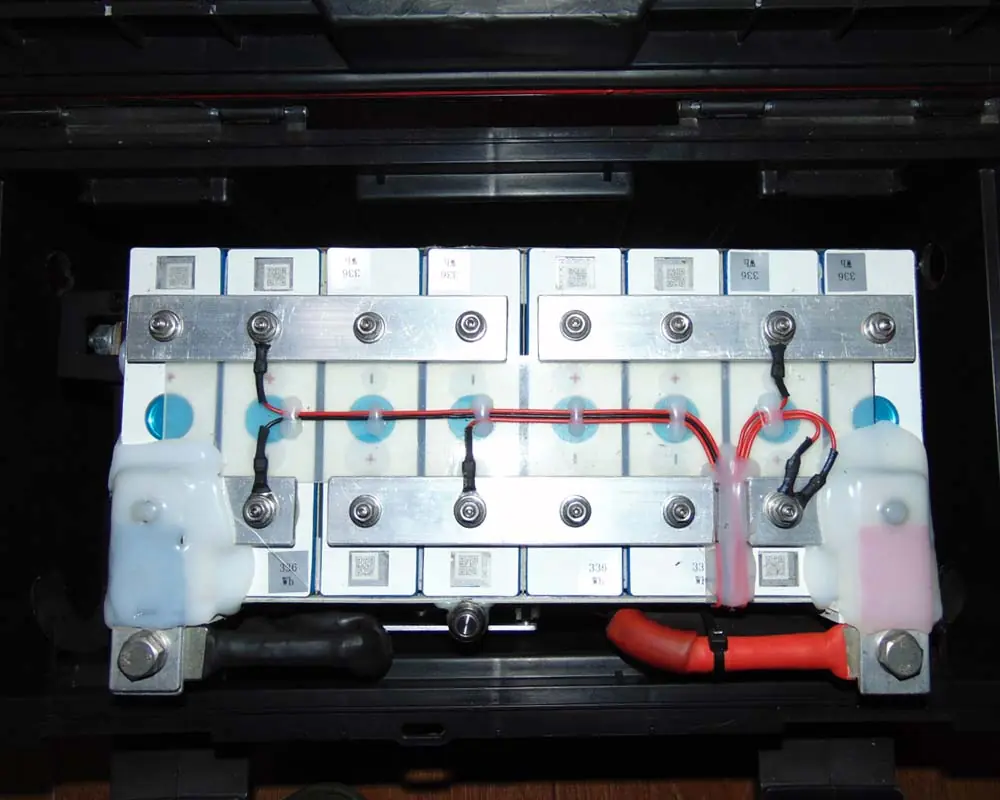
The heart of the system is a Lithium Iron Phosphate (LiFePO4) battery. It has a total capacity of 2.7 kWh (210Ah at 12.8V), built from 8 EVE cells. It is managed by a Smart Jikong (JK) BMS. I chose LiFePO4 because of its incredible lifespan. With a rated 7,000 charge/discharge cycles, this battery will support my hydroponic hobby for many years to come.
The DC/AC Inverter
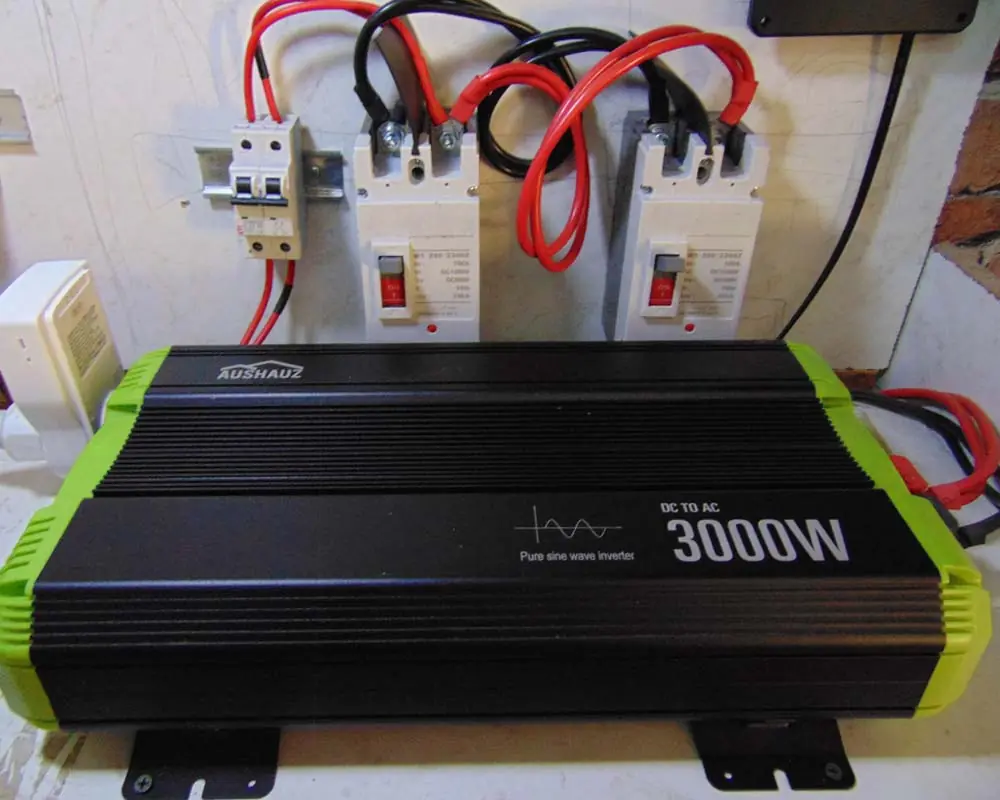
To convert battery power to usable AC, I use an AusHauz 3000W Pure Sine Wave Inverter. It features dual displays that provide real-time data, allowing me to monitor exactly how many watts my garden is consuming at any given moment.
Charging and Support
- Charger: A Mean Well NPB-450 allows for a full recharge in roughly 4-5 hours.
- Gasoline Generator: For extended emergencies, I integrate a 2.6 kW generator that can either power the garden directly or fast-charge the battery bank.
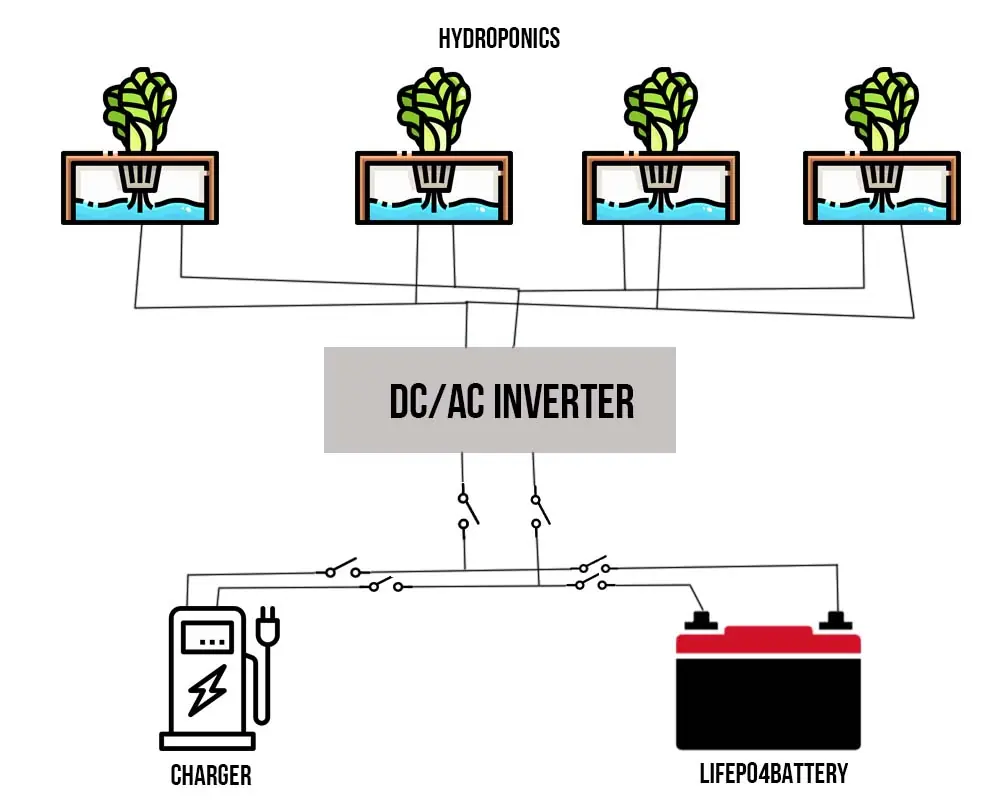
А diagram of DIY battery backup for hydroponics
Energy Budgeting
Calculating the runtime of a hydroponic backup power solution is straightforward:
- Full Power Mode: 2700Wh ÷ 340W ≈ 7.9 hours
- This covers my garden for nearly 8 hours, which easily handles the typical 4-hour outages in my area.
- Economy Mode: By turning off the grow lights and fans, and running only the air/water pumps, consumption drops to 220W.
- 2700Wh ÷ 220W ≈ 12.3 hours
In “Economy Mode,” I can keep the plants alive for over 12 hours. If I utilize the gasoline generator, the system becomes completely autonomous 24/7.
The Future of Urban Food Security
People often ask if a backup system is worth the cost. For me, the answer is a resounding yes. It prevents crop failure and ensures growth isn’t stunted. Most hydroponic plants begin to suffer within 1 to 5 hours without aeration or circulation—it’s simply not worth the risk.
Current Drawbacks
My system is not yet fully automatic. It requires manual activation, which can sometimes disrupt device timers if I’m not careful. Furthermore, being home to flip the switches is a significant limitation. Currently, this setup is also only scaled for my indoor garden, not my outdoor installations.
Moving Toward Total Independence
The next step is full automation. I plan to install solar panels and a hybrid solar inverter to become entirely independent of the municipal grid. This will allow for seamless, automatic power switching.
I also intend to expand my storage to a minimum of 10 kWh. This will be enough to power not only my hydroponics but also my entire household’s essential needs.
I hope this information helps you on your journey toward self-sufficiency. In these turbulent times, becoming as independent as possible is one of the most valuable investments you can make.
Share This Post