
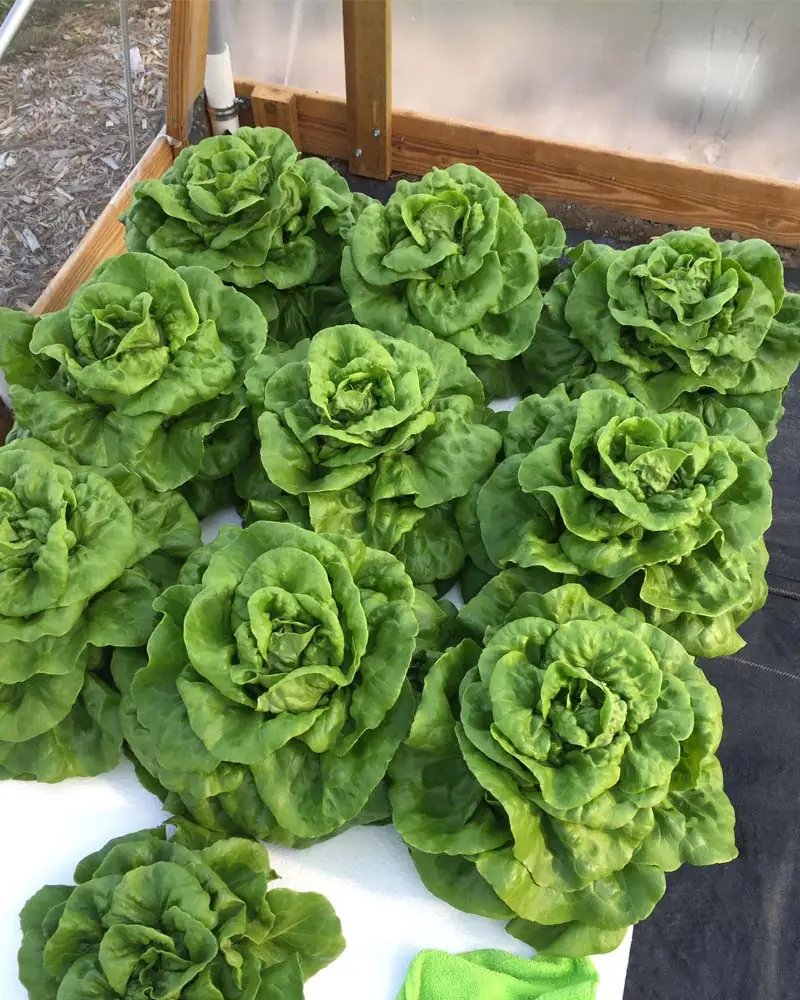
Butterhead lettuce is as beautiful as it is delicious, which is exactly why it’s a staple in my greenhouse. In this article, I’ll walk you through how I successfully grow these massive, leafy greens using the Kratky method.
Essential Gear
I wanted to build a high-capacity Kratky system using materials I already had around the workshop. For the frame, I used three 1×4-8′ boards and a reclaimed 4×8-foot OSB sheet for the base.
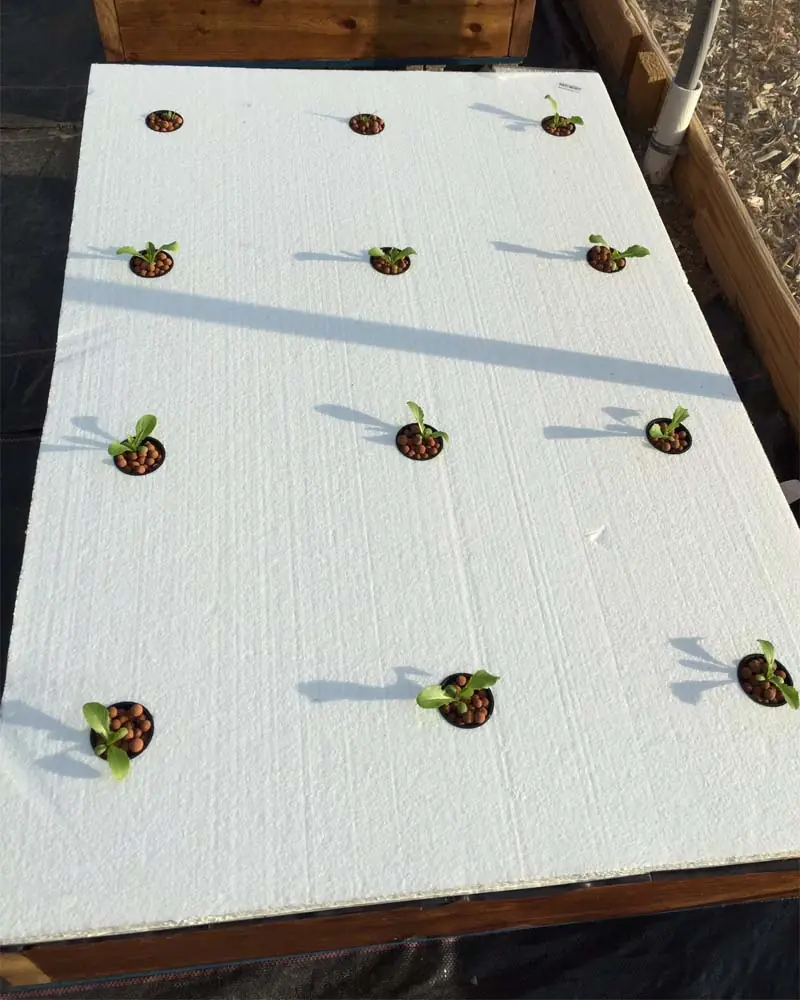
I constructed the reservoir using simple wood screws, then lined the interior with a single, continuous sheet of 6 mil black polyethylene. I secured the liner to the top edge of the frame using a heavy-duty stapler. To finish the “lid,” I used a standard 4×8-foot EPS foam board. I used a hole saw to cut 12 openings for my net pots, spaced exactly 12 inches apart to allow for maximum growth.
Read also: How to Clean, Fix, and Replace Your Desktop Hydroponic Pump
While I used leftover materials, here is a cost breakdown if you were to buy everything new today:
| Material Item | Specification | Quantity | Estimated Price (USD) |
| Lumber (Sides) | 1×4-8′ Common Board (Untreated Pine) | 3 pcs | $18.00 |
| OSB Sheathing | 7/16″ x 4′ x 8′ Sheet | 1 pc | $19.00 |
| Polystyrene Sheet | 1″ x 4′ x 8′ EPS Foam Board | 1 pc | $17.00 |
| Plastic Liner | 6 mil Black Polyethylene (Visqueen) | Small Roll | $12.00 |
| Net Pots | 2-inch Heavy Duty (Pack of 12) | 1 pack | $10.00 |
| Fasteners | 1.25″ Wood Screws & Staples | 1 box/ea | $11.00 |
| TOTAL | $87.00 |
Preparation
The reservoir has a total capacity of roughly 65 gallons. I filled it with tap water and let it sit for 24 hours to dissipate any chlorine. After calibrating my meters, I adjusted the pH to a steady 5.7 using General Hydroponics pH Down.
My base tap water has an EC of 0.4 mS/cm. I added 585 milliliters of Flora Series nutrients to bring the initial EC up to 0.8 mS/cm for the seedling stage.
Read also: Water Management In Small Indoor Hydroponics
The Growing Process
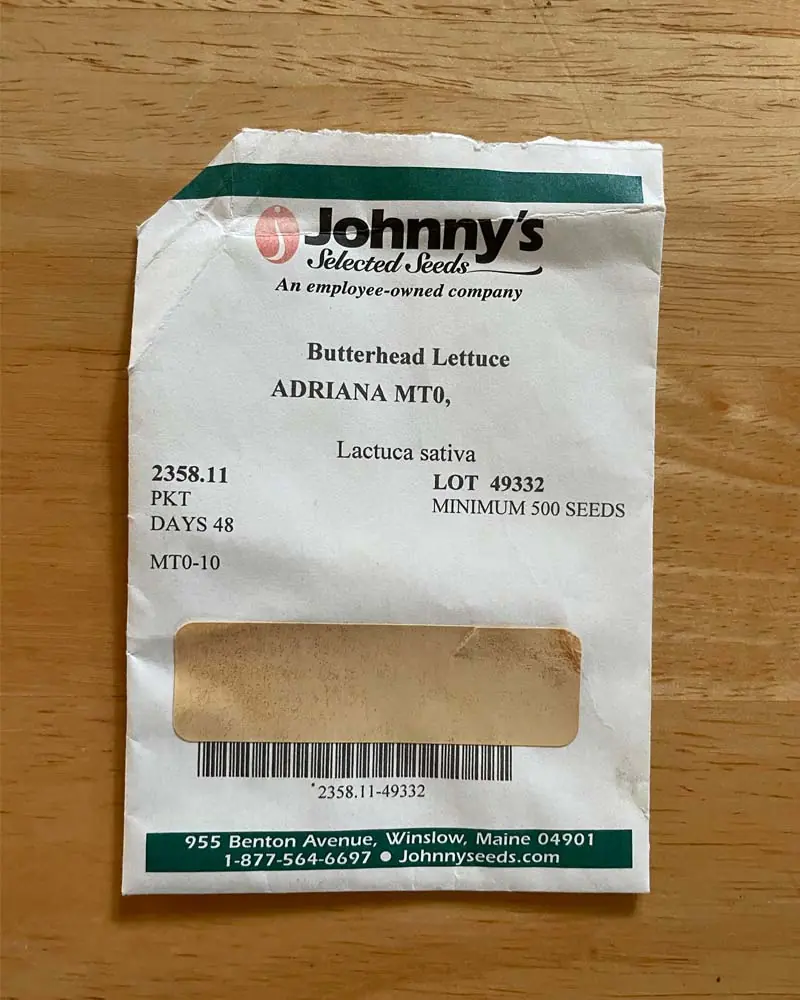
I sourced my seeds from Johnny’s Selected Seeds—their germination rate is consistently near 100%. I chose a Butterhead variety specifically for its ability to produce large, firm, and nutrient-dense heads.
Germination
I started the seeds in a 50/50 mix of coco coir and perlite.
Transplanting
Once the sprouts developed 2–3 true leaves, I moved them into the 2-inch net pots with LECA. I positioned them so the roots just touched the bottom of the pot.
Setting the Level
I placed the pots into the foam tray, ensuring the bottom half-inch of each pot was submerged. This allows the roots to “wick” the nutrient solution immediately.
I kept the system in the greenhouse to take advantage of the warmth and south-facing sunlight. To prevent the “tip burn” or rot often associated with Butterhead, I kept the door and windows slightly ajar. This constant, gentle airflow is vital for healthy growth.
By day 14, the plants were thriving, so I boosted the nutrients to a target EC of 1.8 mS/cm.
Read also: 5 Simple DIY Hacks To Prevent Algae in AeroGarden
Troubleshooting Common Issues
Because the system is housed in a well-ventilated greenhouse, pests and diseases were non-existent. My only “visitor” was a single slug, which I removed manually. As a precaution, I applied a few iron phosphate granules around the base of the reservoir. During the peak afternoon heat, I used a light shade cloth to ensure the water temperature didn’t climb too high.
Read also: Top Reasons Why Hydroponic Leaves Wilt and How to Fix Them
Harvest
After 40 days, the results were undeniable. The first head I pulled was a massive 12 inches across—a size you simply cannot find in a standard grocery store. I harvested them one by one as needed for meals. All 12 heads reached their full potential, measuring between 10 and 12 inches.
Costs vs. Results
|
Item |
Quantity |
Cost |
|---|---|---|
|
Nutrients |
1170 ml |
$11.70 |
|
Water, pH Down, seeds. |
$2.00 |
|
|
Total Cost |
$13.70 |
Growing 12 premium heads of lettuce cost me just $1.14 per head. Considering the average supermarket price for a (much smaller) Butterhead is $3.50, this system pays for itself in no time.
If you’re looking for a low-maintenance way to grow high-quality greens, the Kratky method is the way to go. Let me know if you have any questions in the comments!
Share This Post