

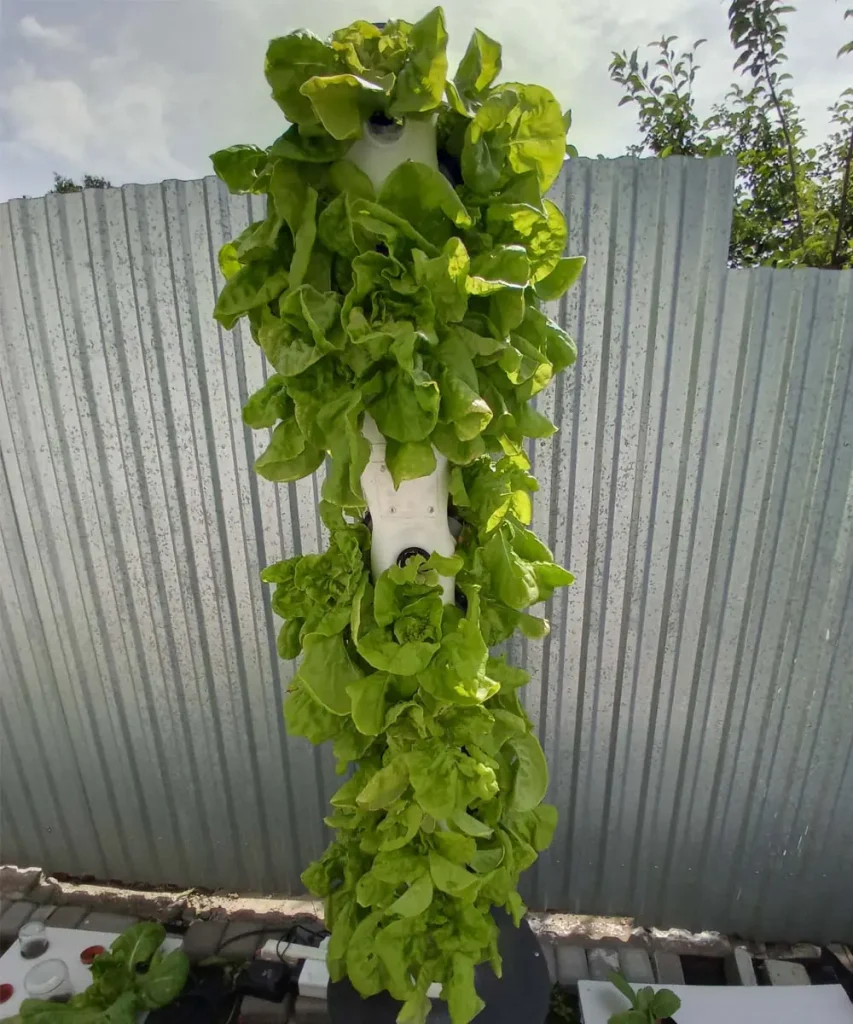
In this guide, I’ll show you exactly how I built a 30-plant hydroponic tower using PVC pipe for less than $80 in materials. Having tested multiple hydroponic systems over the years, I’ve found that this tower setup gives me the highest yield per square foot while remaining budget-friendly to build.
Understanding the Science
I designed this system specifically for growing leafy greens. Because greens are compact, a vertical tower is ideal—it allows me to grow dozens of plants within a tiny footprint.
In a hydroponic tower, the nutrient solution is pumped from the reservoir up to the top of the column. From there, the solution is distributed into small streams through a top sprinkler, delivering uniform irrigation to the plant roots as water flows downward.
Why Choose a Tower System Instead of DWC?
|
Tower |
DWC |
|---|---|
|
Higher plant capacity |
Lower plant capacity |
|
Smaller footprint |
Larger footprint |
|
Water pump required |
Air pump required |
|
Ideal for leafy greens |
Ideal for larger crops (e.g., tomatoes) |
You can plant three times as many leafy greens in a tower as you can in a DWC (Deep Water Culture) or Kratky system covering the same footprint. The primary trade-off is that towers are impractical for tall or heavy crops like tomatoes or cucumbers.
Before You Start
To build a tower like this, you will need basic handyman skills and comfort using power tools. First and foremost, you will need a drill with a hole saw, along with a heat gun and a screwdriver.
You will also need a basic understanding of practical fluid mechanics—specifically, how water pumps, sprays, and drains through the tower.
Expect to get your hands dirty applying silicone and using wrenches to tighten nuts and bolts.
If you have all tools and materials ready, you can complete this build in a single day. It took me about three days because I made a few design adjustments along the way.
Materials List
- 12-gallon plastic basin: $5
- 7-foot PVC pipe (6-inches diameter): $20
- Water pump: $25
- Pump hose: $2.50
- Pipe clamps: $3
- 2-inch net pots: $3.70
- Cyclic timer: $10
- Bucket lid: $2
- PVC sleeves: $6
- Reflective insulation: $1.50
- Total Cost: $78.70
Pump Specifications
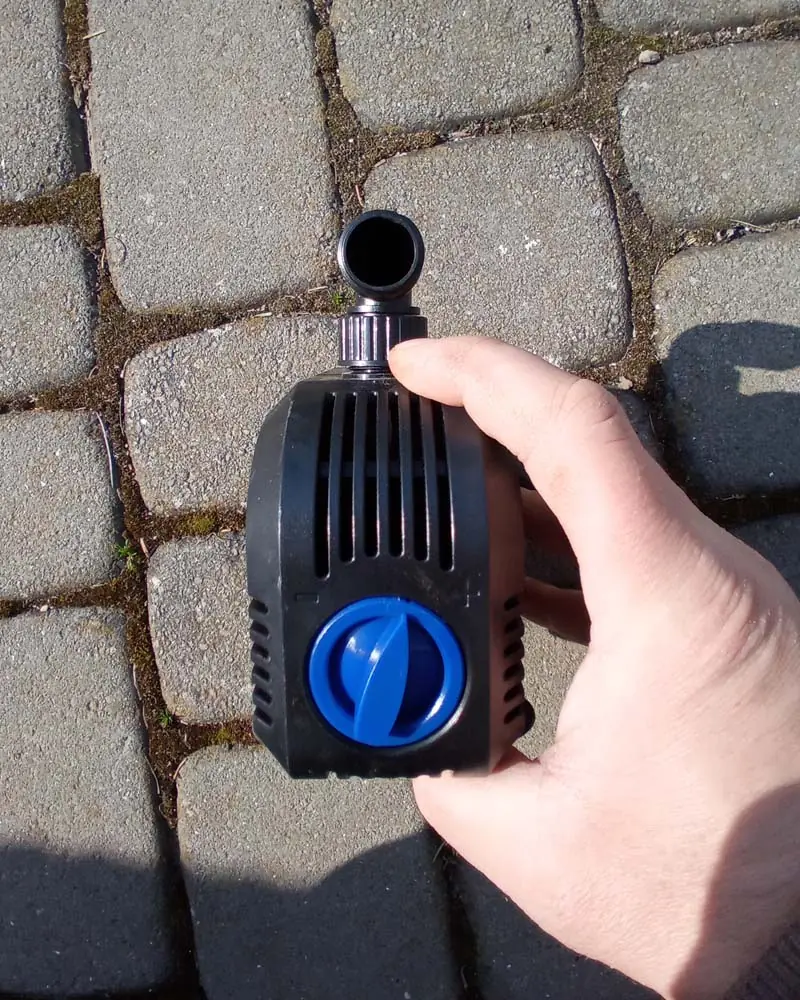
I used a SunSun HJ-2500 pump to drive water through my system:
|
Specification |
Value |
|---|---|
|
Application / Type |
Pond / Fountain / Aquarium Submersible Pump |
|
Flow Rate (Max) |
2,500 L/h (660 GPH) |
|
Power Consumption |
45 W |
|
Max Lift Height (Head) |
2.7 m (8.85 ft) |
|
Power Supply |
220–240 V / 50 Hz |
|
Cable Length |
2.5 m (8.2 ft) |
|
Hose Adapter Sizes |
14 mm, 16 mm, 20 mm (approx. 1/2″, 5/8″, 3/4″) |
|
Flow Control |
Adjustable |
|
Dimensions (L × W × H) |
140 × 75 × 107 mm |
|
Weight |
~1 kg (2.2 lbs) |
Tools
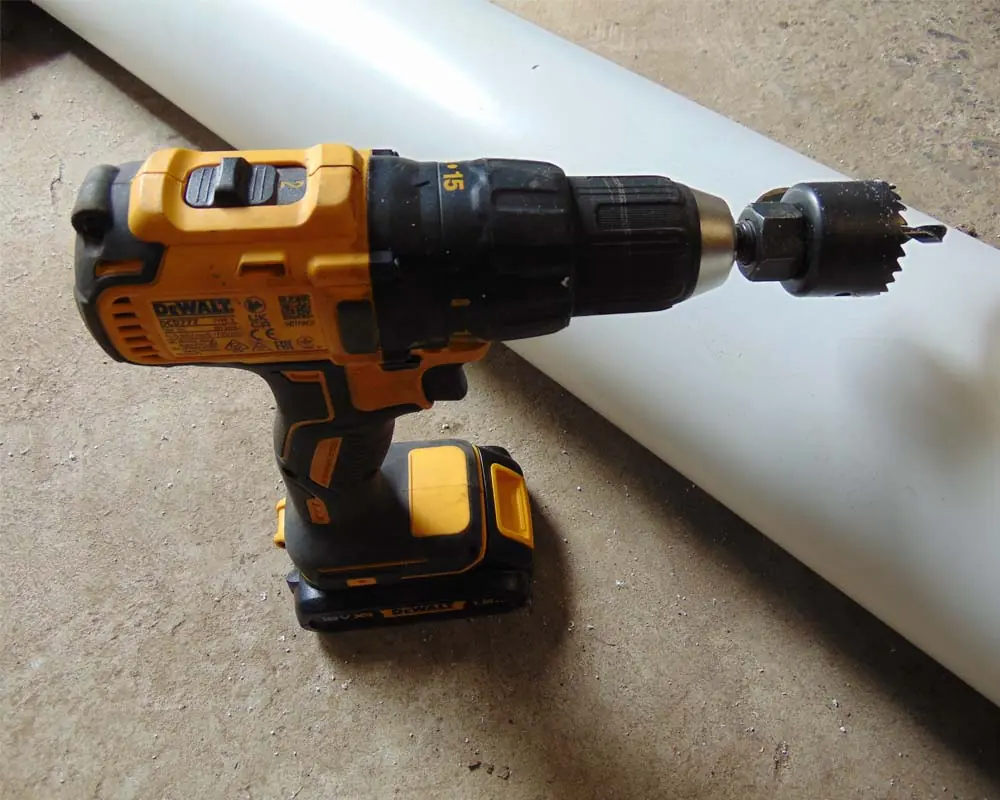
- Drill with a hole saw bit (2-inches diameter)
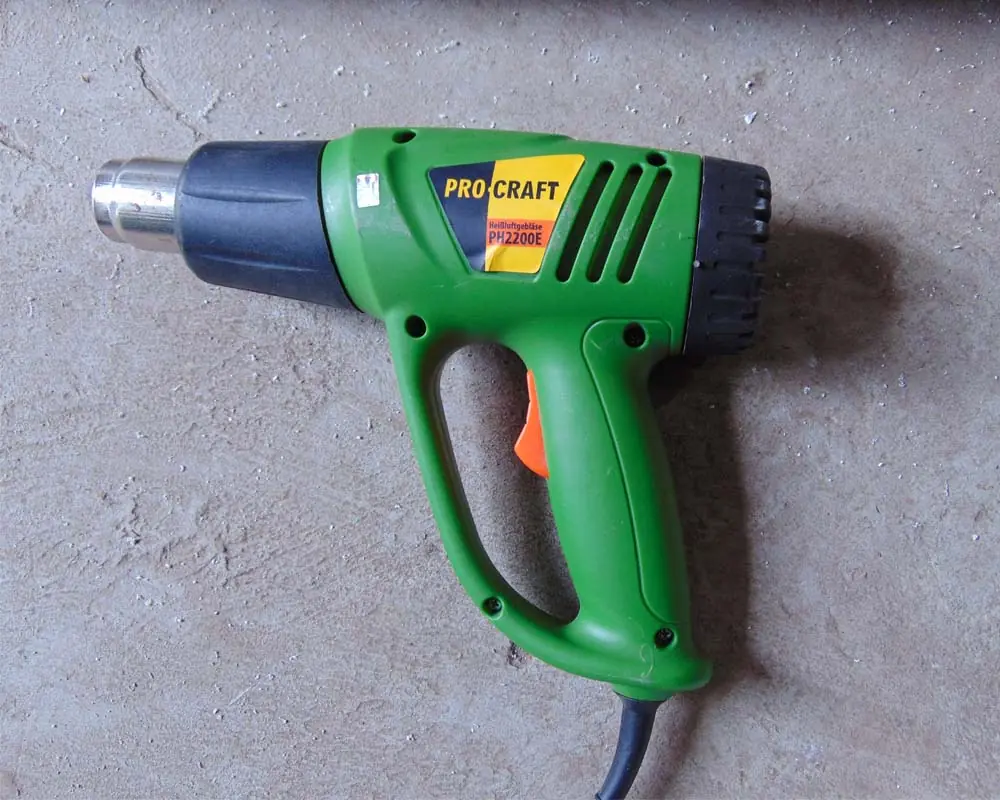
- Heat gun
- Set of drill bits and attachments
- Utility knife
- Pliers and Screwdriver
- Caulking gun
Step-by-Step Construction Guide
Step 1: Preparing the Tower
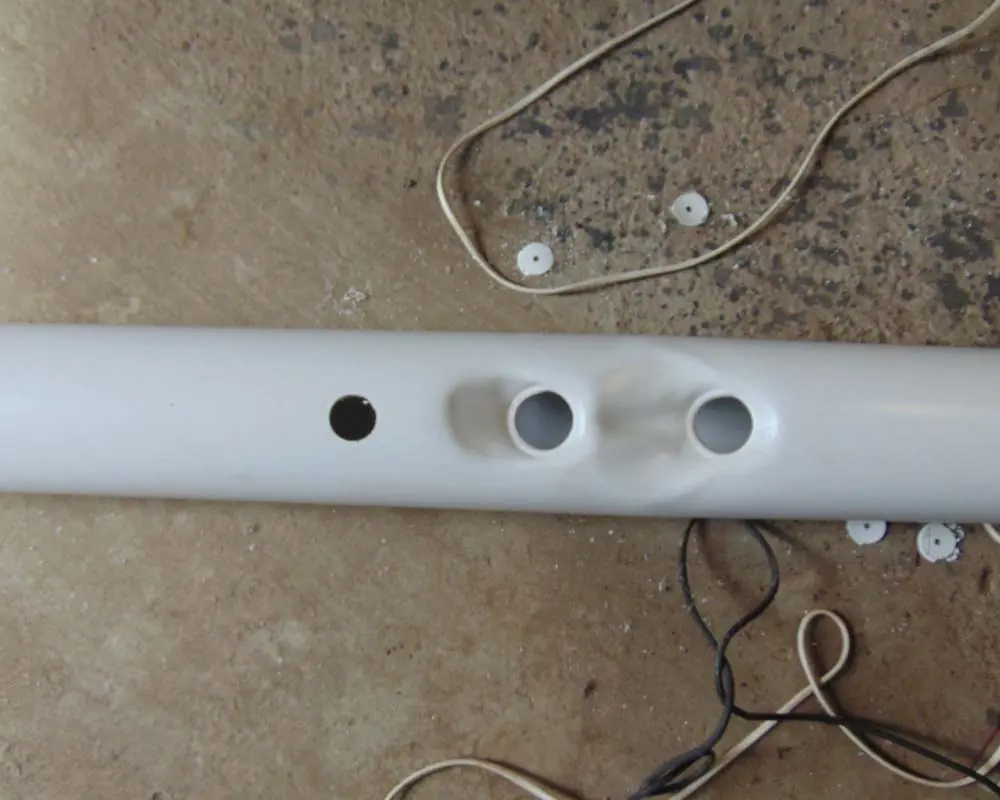
First, I drilled the mounting points for the pots using a 2-inch-diameter hole saw—matching the outer diameter of the net pots.
I drilled 30 holes across three vertical columns arranged at 90-degree angles to each other (facing South, East, and West). I left the North side smooth so all plants would receive adequate sunlight. The vertical spacing between holes in each column was 6 inches.
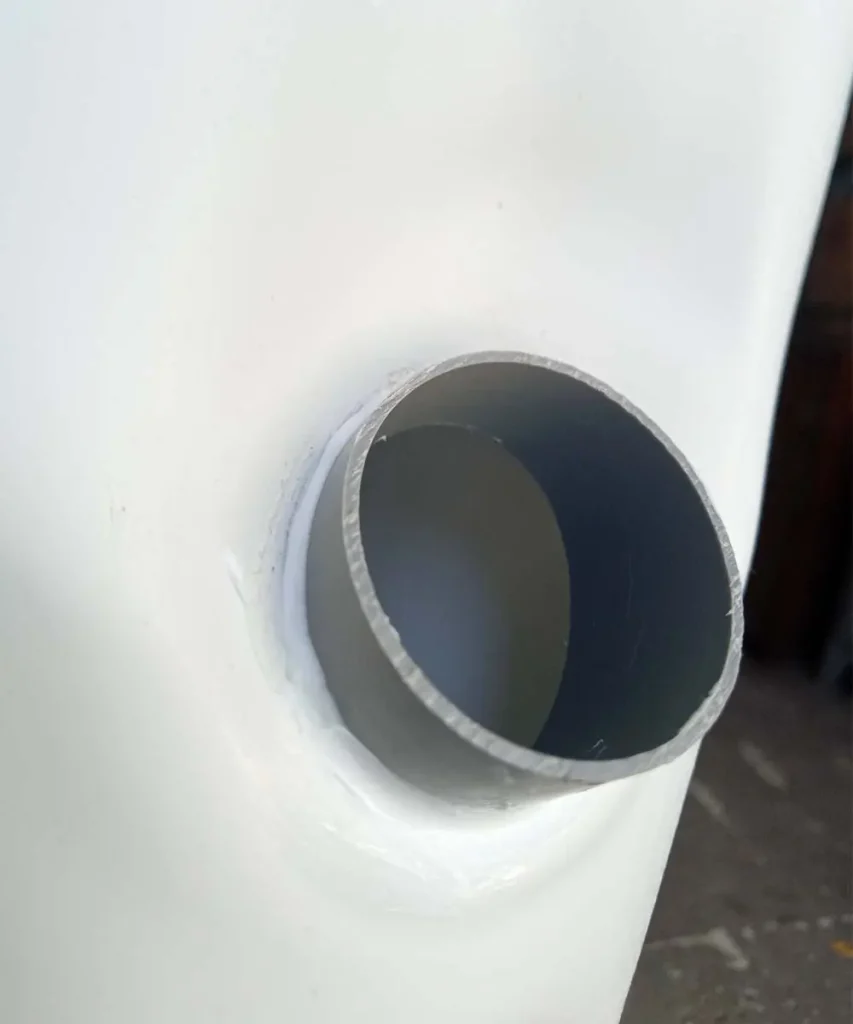
After drilling, I used a heat gun to shape the planting pockets. To ensure the pots angled upward at roughly 45 degrees rather than sitting flat, I heated the PVC near each hole, inserted a net pot, and bent the softened plastic upward until it held the desired angle.
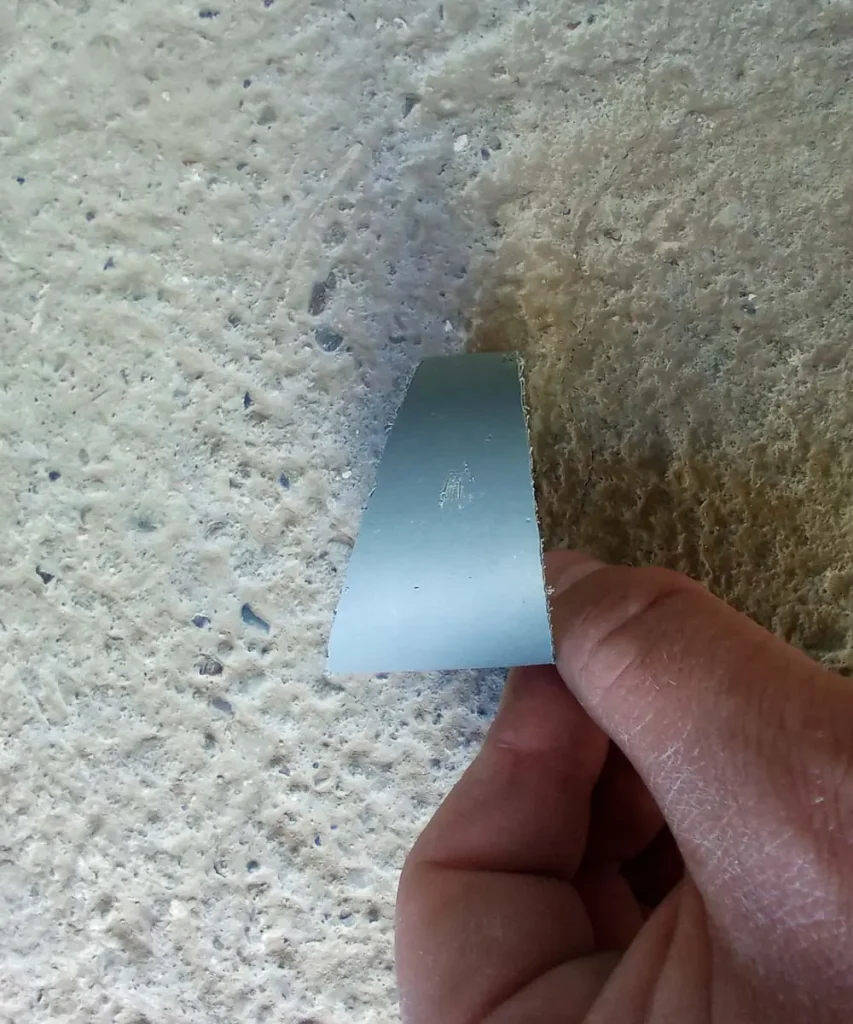
These PVC sleeves were two inches in diameter. I cut one end straight (90 degrees) and the inner end at a 45-degree angle. The 45-degree cut sits inside the main pipe, allowing water to trickle directly over the growing medium without splashing outward.
Each sleeve measured 2 inches on its long side and 1 inch on its short side. I cut 30 total sleeves.
I inserted the sleeves into the holes with the short side on top and the long side on the bottom, securing them in place with waterproof sealant. After letting the sealant cure for two days, the joints were completely leak-proof, holding the net pots securely.
Step 2: The Reservoir & Plumbing
I placed the submersible water pump at the bottom of the basin next to the tower base. Most pumps include suction cups that hold them firmly to the bottom. I attached the pump hose to the outlet and routed it up through a hole drilled into the main vertical PVC pipe.
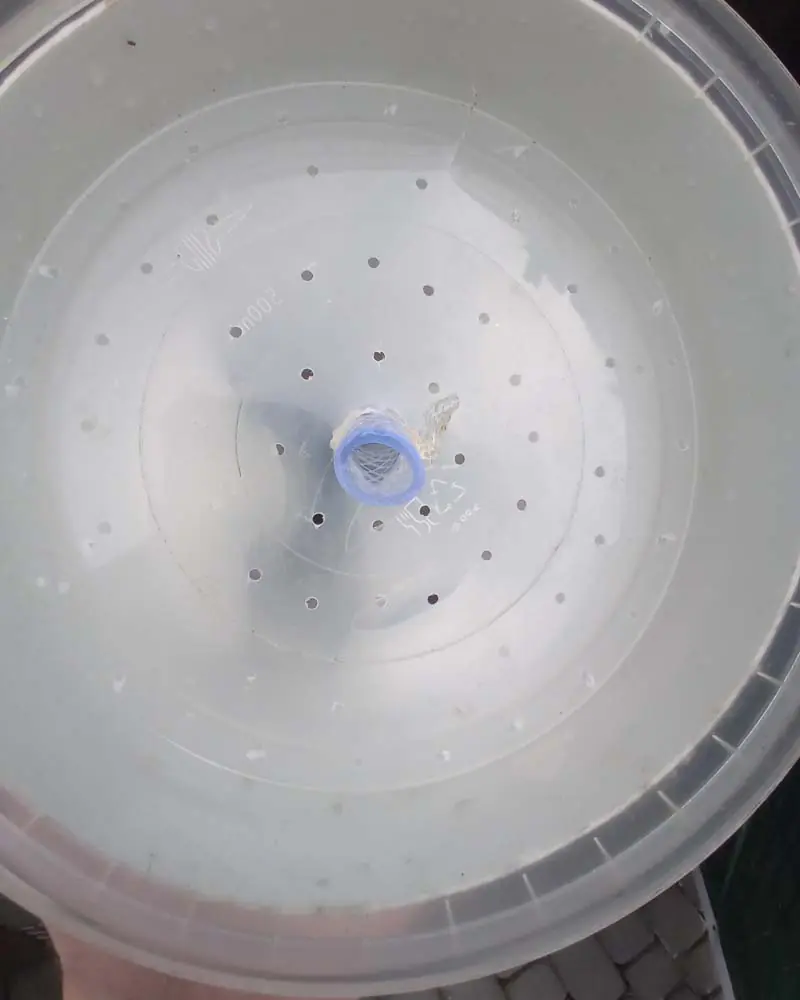
For the top distribution manifold, I repurposed a small, round plastic container matching the inner diameter of the pipe. I drilled several small holes in the bottom to create a showerhead spray effect, along with a center hole for the supply line. The container fits snugly into the top of the pipe without extra fasteners. I painted the container lid black to block light and prevent algae growth.
Step 3: Securing the Tower
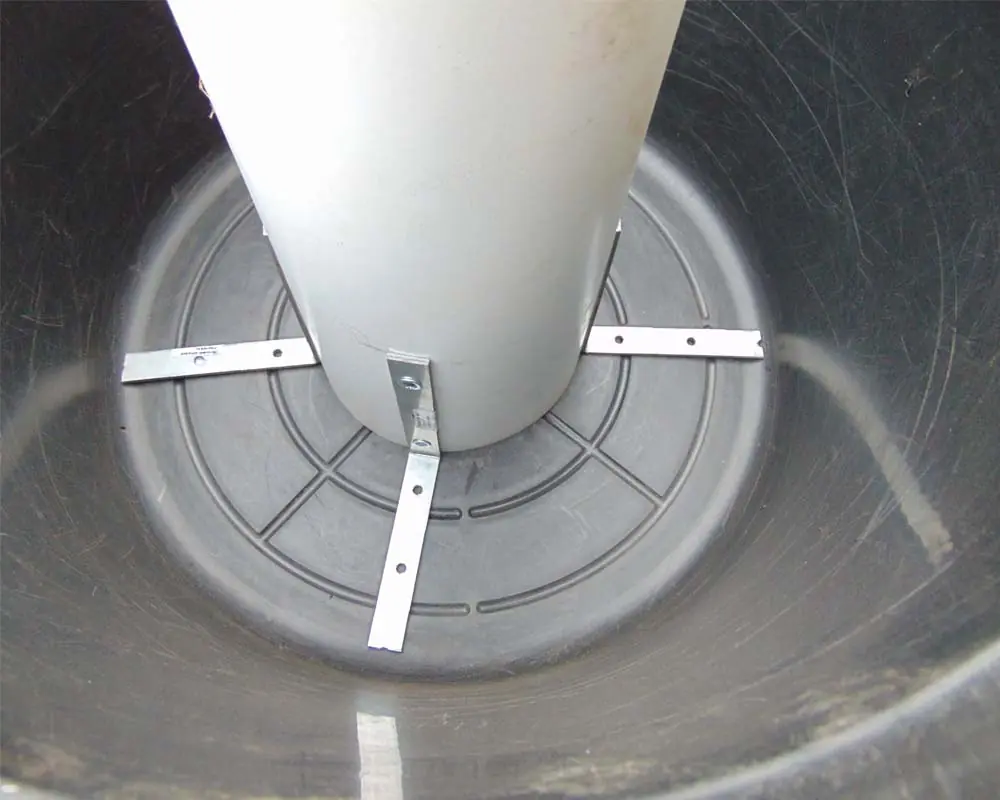
To stabilize the vertical column, I mounted four galvanized L-shaped brackets to the bottom of the pipe with self-tapping screws so they rested against the inside bottom of the basin.
Near the top edge of the basin, I installed three longer metal brackets attached to the PVC pipe and bolted directly through the wide rim of the basin. This anchoring design keeps the system stable even during high winds, provided the reservoir contains water.
Step 4: Assembly & Testing
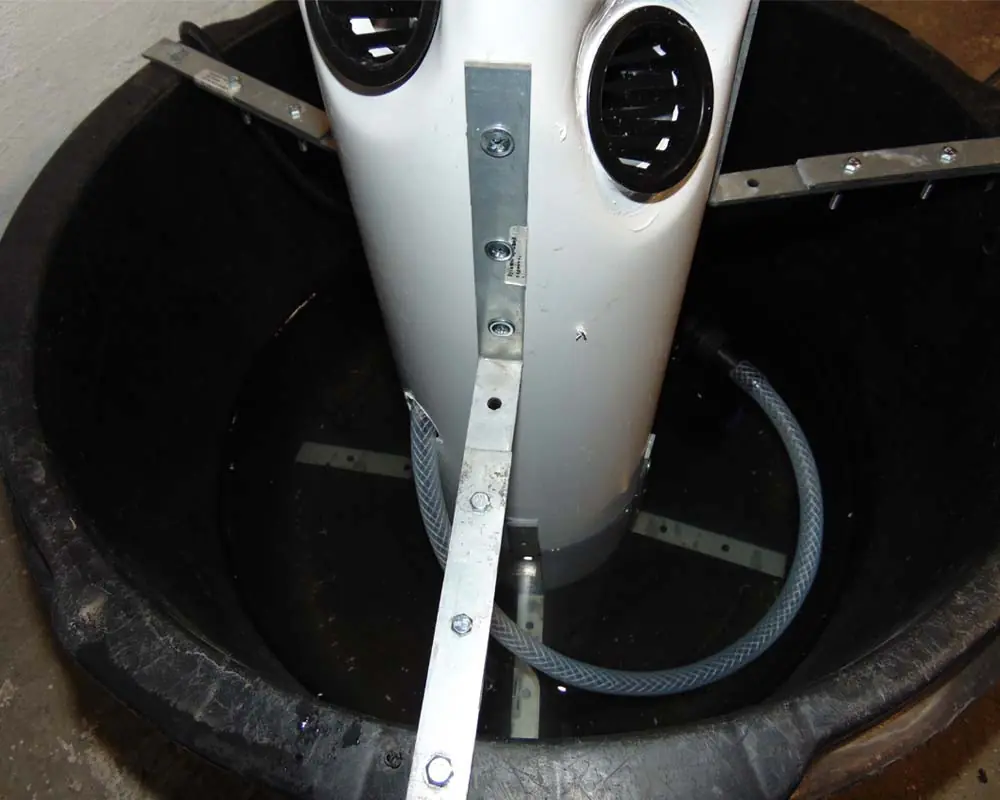
After placing all net pots, I turned on the pump to test the plumbing. I verified that every pocket received consistent water flow and checked for leaks around the sleeve seams.
Once proper flow was confirmed, I created a custom reservoir lid from 1-inch-thick expanded polyethylene. I cut a disc matching the basin diameter, added a center cutout for the pipe, and made a single radial slit so I could slide it into place. I fastened the lid to the basin rim using self-tapping screws to keep sunlight out of the reservoir.
To prevent the nutrient solution from overheating outdoors, I wrapped the basin in reflective insulation. This step dropped the water temperature inside the reservoir by 7°F.
With that, the build was complete! This approach allowed me to save money on a hydroponics setup without compromising structural integrity or plant yield.
Growing Lettuce
Setting Up
I filled the basin with tap water and let it sit uncovered for 24 hours to let dissolved gases balance out. I adjusted the pH down to 5.8 using pH-Down, checking my readings with an Aqua Master Tools P50 Pro.
Next, I mixed in Plagron fertilizer at a rate of 5 mL per gallon from both Part A and Part B canisters (120 mL total). The resulting EC reading was 1.2 mS/cm.
I chose Butterhead lettuce because it is a fast-growing hydroponic plant.
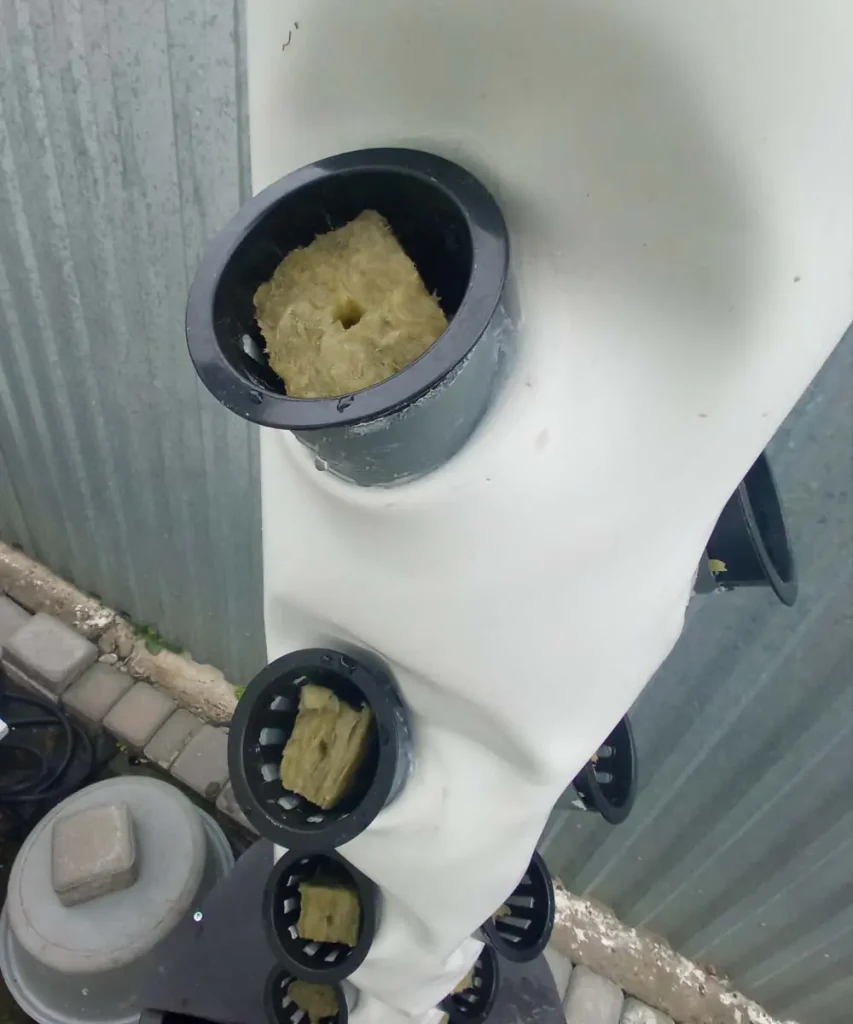
I cut 30 cubes of rockwool (1.5 × 1.5 inches), soaked them in the prepared nutrient solution, placed two seeds into a small indentation in each cube, and set the cubes inside the net pots.
I connected the pump to a cyclic timer, setting it to run on a cycle of 5 minutes ON and 10 minutes OFF.
Growth Phases and Maintenance
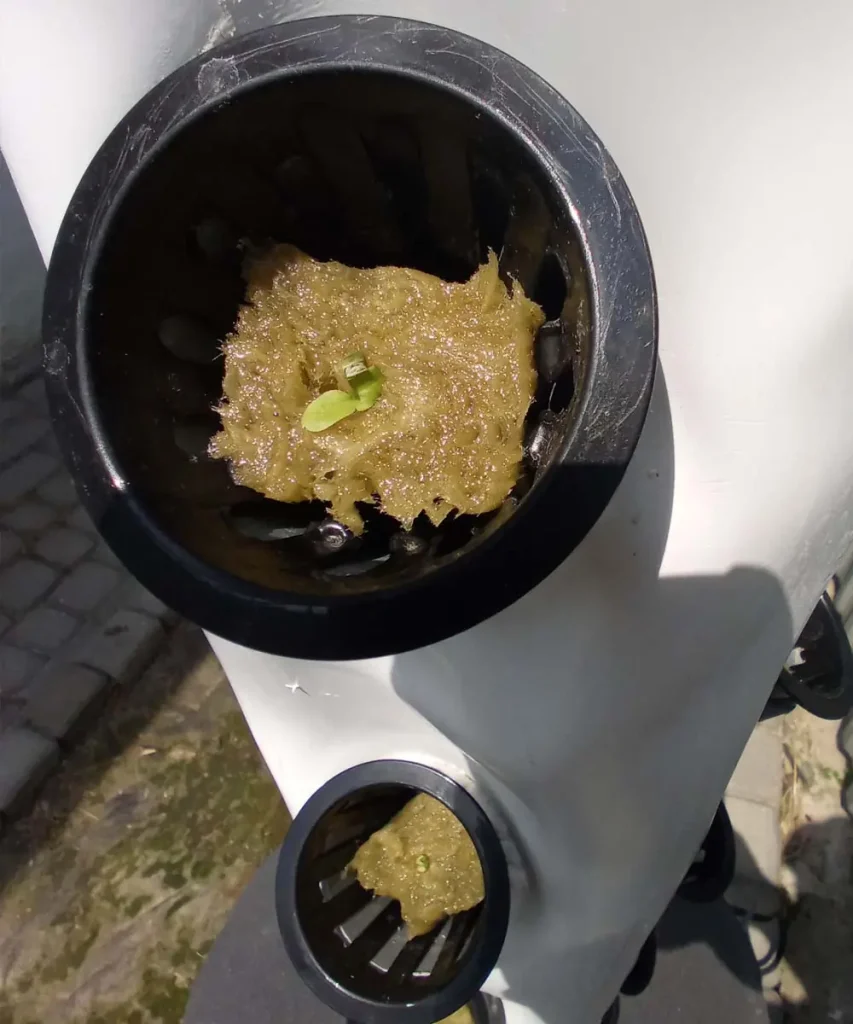
By day 5, nearly all seeds had germinated, showing small cotyledons emerging from the rockwool.
I monitored pH and EC daily. Because pH tends to drift upward during early growth, I added small doses of pH-Down as needed. Water levels dropped slightly over time due to ambient evaporation, so I topped off the reservoir as needed.
Throughout the grow cycle, I periodically cleaned the pump intake to remove minor algae build-up.
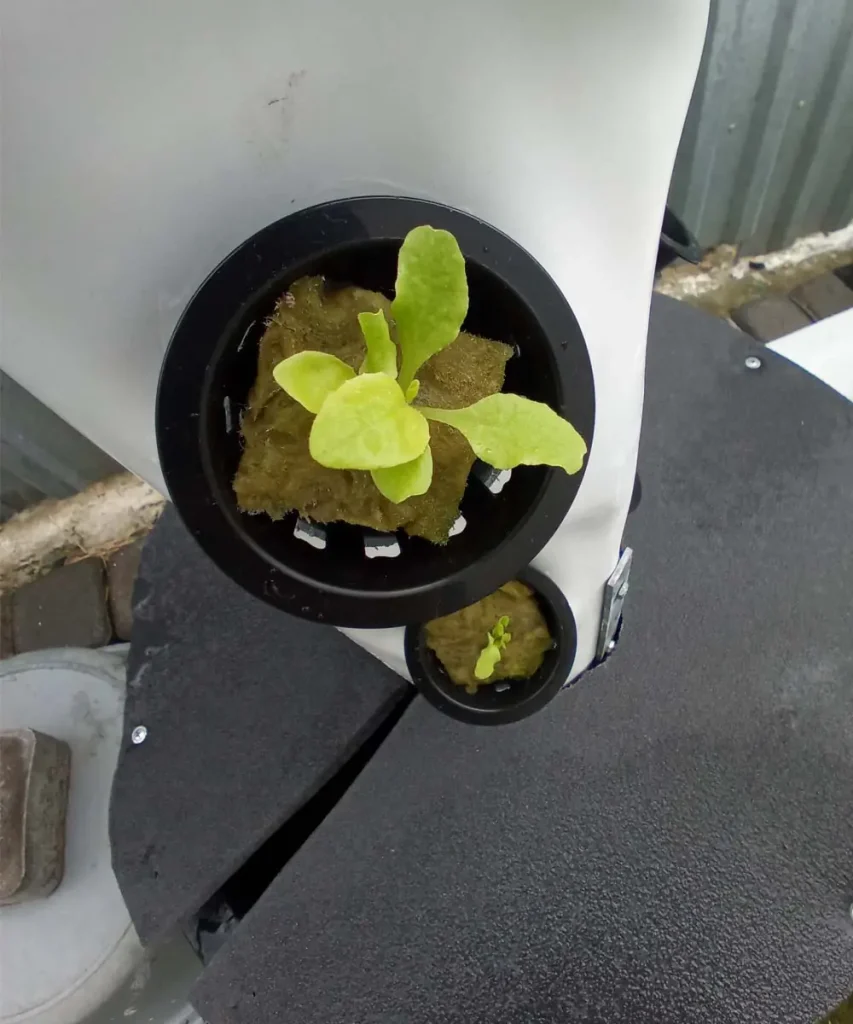
By day 12, the seedlings had developed 2–3 true leaves and were growing rapidly.
By day 23, the foliage had expanded significantly. I added a supplemental dose of Plagron fertilizer (30 mL of Part A and Part B), bringing the target EC up to 1.6 mS/cm.
Troubleshooting Common Issues
High EC (Nutrient Burn)
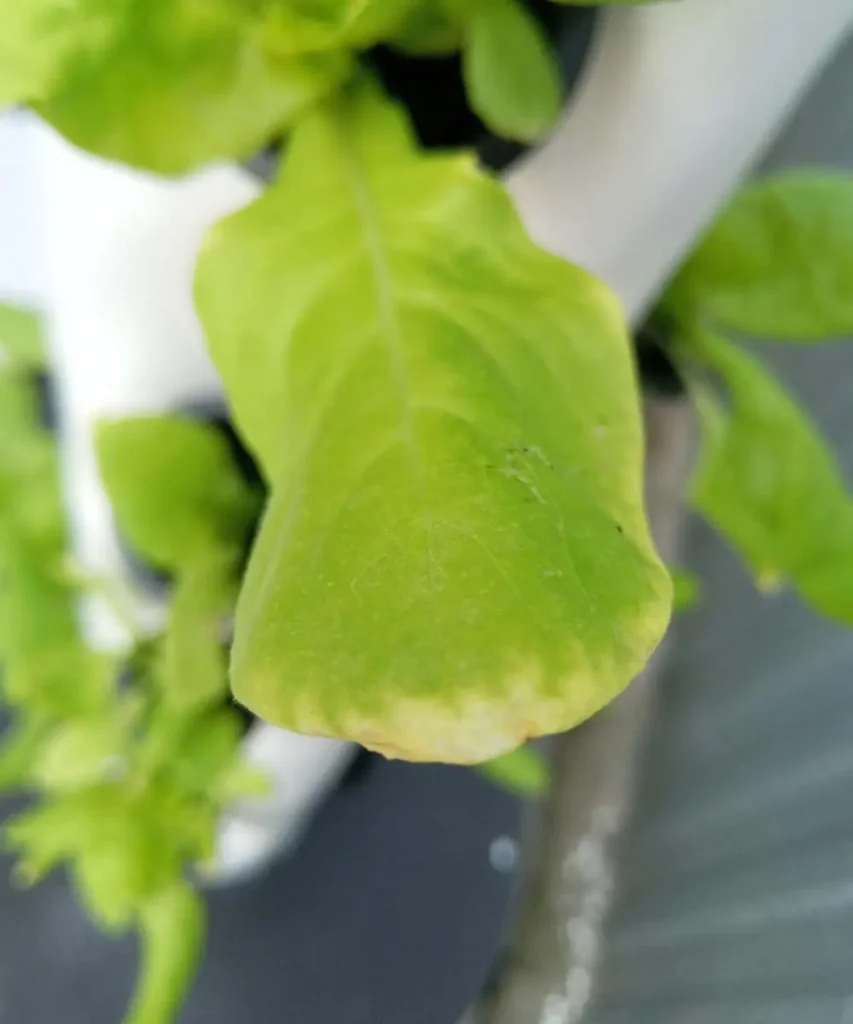
Around the 4th week, the leaves began to show signs of slight scorching and yellowing. My EC meter showed 2.4 mS/cm because I had over-fertilized in an attempt to accelerate growth. High salt levels hindered nutrient uptake. I fixed this by draining a portion of the reservoir and diluting it with fresh water until the EC dropped back to 1.6 mS/cm.
Leaf Wilting
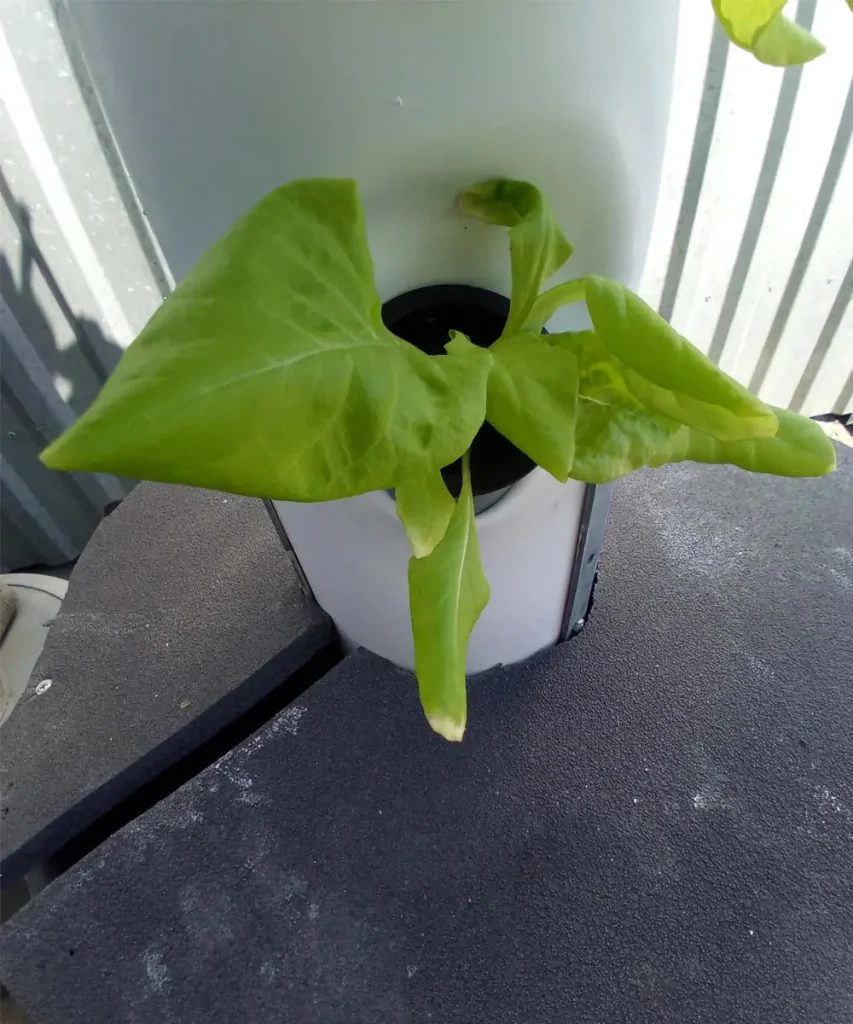
During a brief heat wave, I observed temporary leaf wilting. The roots could not uptake water fast enough to offset transpirational loss. I adjusted the cyclic timer to run 10 minutes ON and 5 minutes OFF during peak heat hours, which restored plant turgor.
White Fuzz
Toward the end of the grow, I noticed harmless white fuzz (saprophytic fungi) on top of the rockwool. It did not affect plant growth or health.
Root Rot Prevention
Thanks to the natural aeration inherent to hydroponic towers, the roots remained healthy and bright white throughout the entire 37 days without requiring a single full reservoir change—I only topped off water levels as needed.
Yield
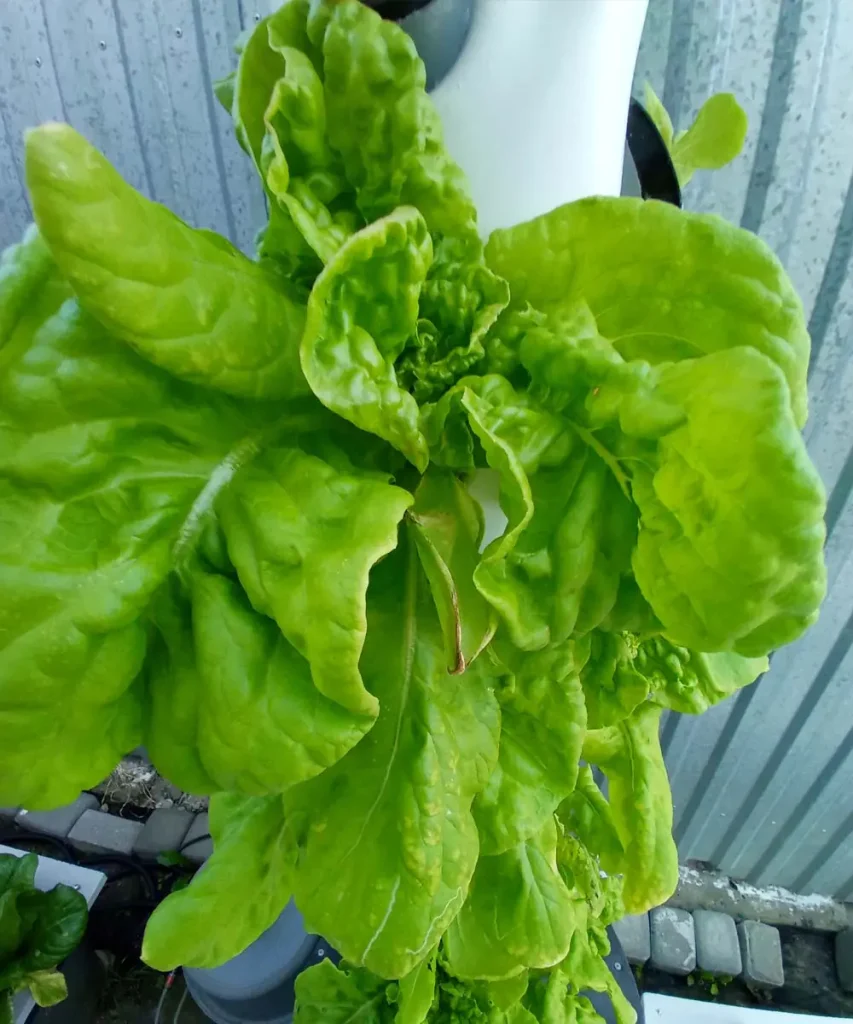
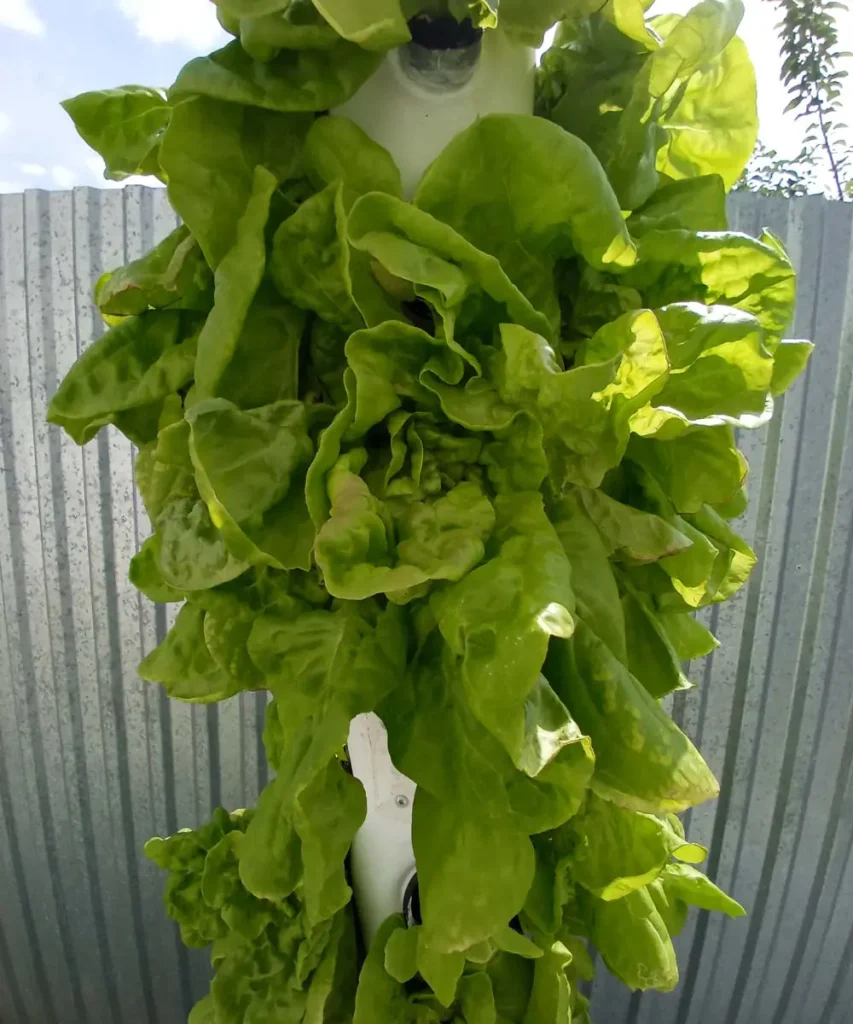
By day 37, the lettuce was ready to harvest. Out of 30 pockets, I harvested 26 full heads of lettuce (4 seeds failed to establish early on).
The heads were large and had juicy leaves. I believe that a hydroponic tower is the most effective way to grow lettuce because it takes up little space and ensures a high yield.
Costs vs. Results
|
Item |
Quantity |
Cost |
|---|---|---|
|
Electricity |
8.3 kWh |
$1.40 |
|
Nutrients |
360 ml |
$2.16 |
|
Water & Additives |
Tap water, pH-Down, Rockwool |
$2.00 |
|
Total Cost |
$5.56 |
Over the entire growing cycle, I spent $5.56 and harvested 26 heads of lettuce. Each head of lettuce cost me $0.21!
Building this vertical setup taught me a lot about vertical fluid distribution and nutrient management in compact spaces. I hope my experience shared here will be useful to you. Share your thoughts in the comments!
Share This Post
Have you tried this with strawberries?
I haven’t tried strawberries in this setup just yet, but it’s definitely on my to-do list for an upcoming trial!