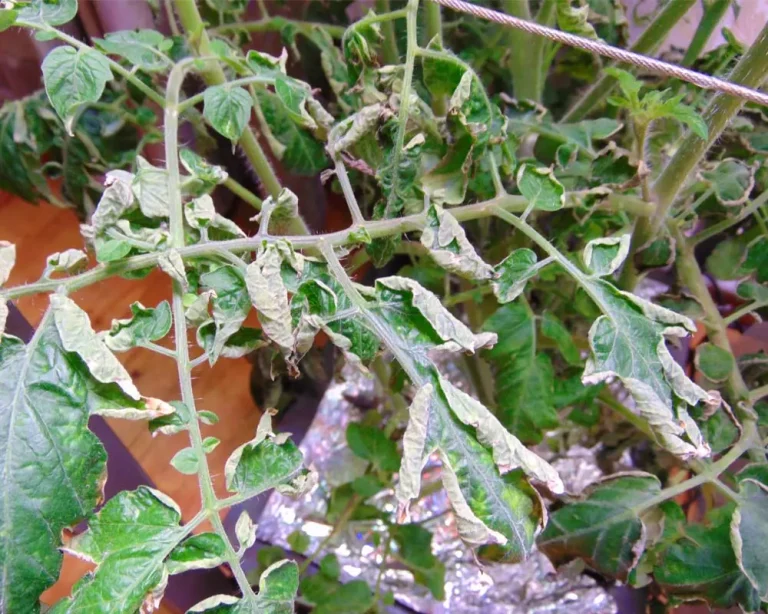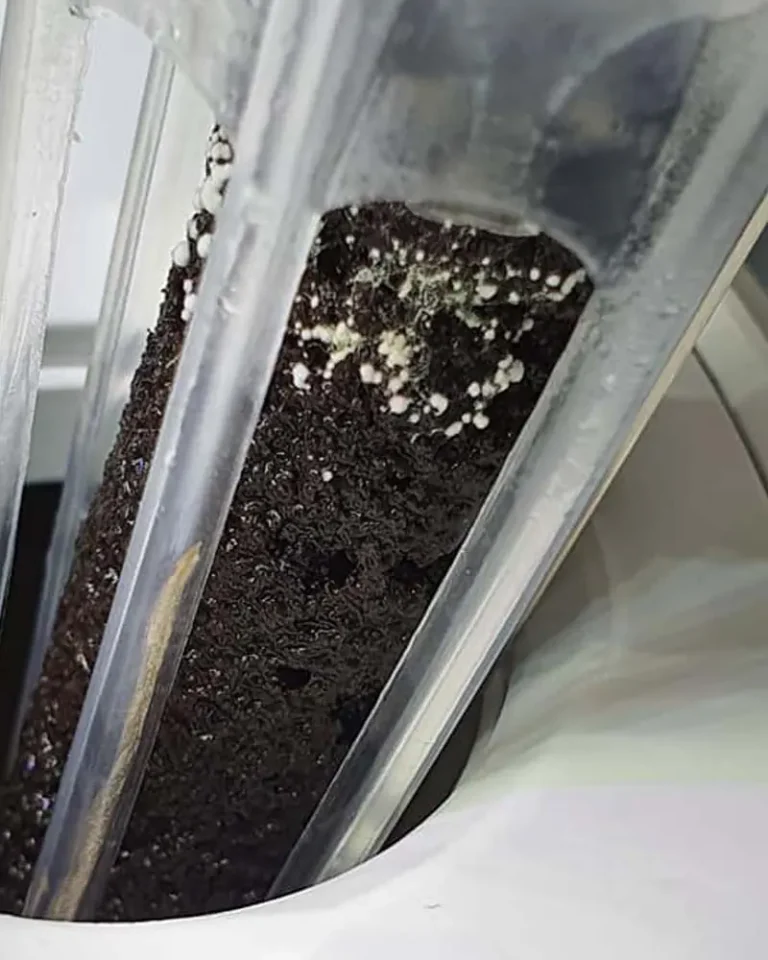

In this article, I’ve compiled five causes of yellowing leaves in hydroponic plants that I’ve encountered most often. I’ll explain how to distinguish one cause from another based on my experience, and exactly what I did to fix the problem.
Before diving into the details, here is a quick overview of how to pinpoint the issue based on where the yellowing starts:
| Deficiency/Issue | Where it Starts | Visual Symptoms | Main Cause |
| Nitrogen | Lower/Older Leaves | Uniform fading to pale yellow, including veins. | Low EC/Lack of basic nutrients |
| Magnesium | Lower/Middle Leaves | Yellowing between the veins; veins stay dark green. | Calcium lockout (hard water) or low pH |
| Iron | Upper/Young Leaves | Bright yellowing between veins; veins stay green. | High pH (>6.5) locking out iron |
| Sulfur | Upper/Young Leaves | Uniform fading to pale yellow, including veins. | Pure RO water without a buffer |
| Root Rot | Random/Whole Plant | Dull yellowing accompanied by severe wilting. | Pythium outbreak due to high water temp |
Nitrogen Deficiency
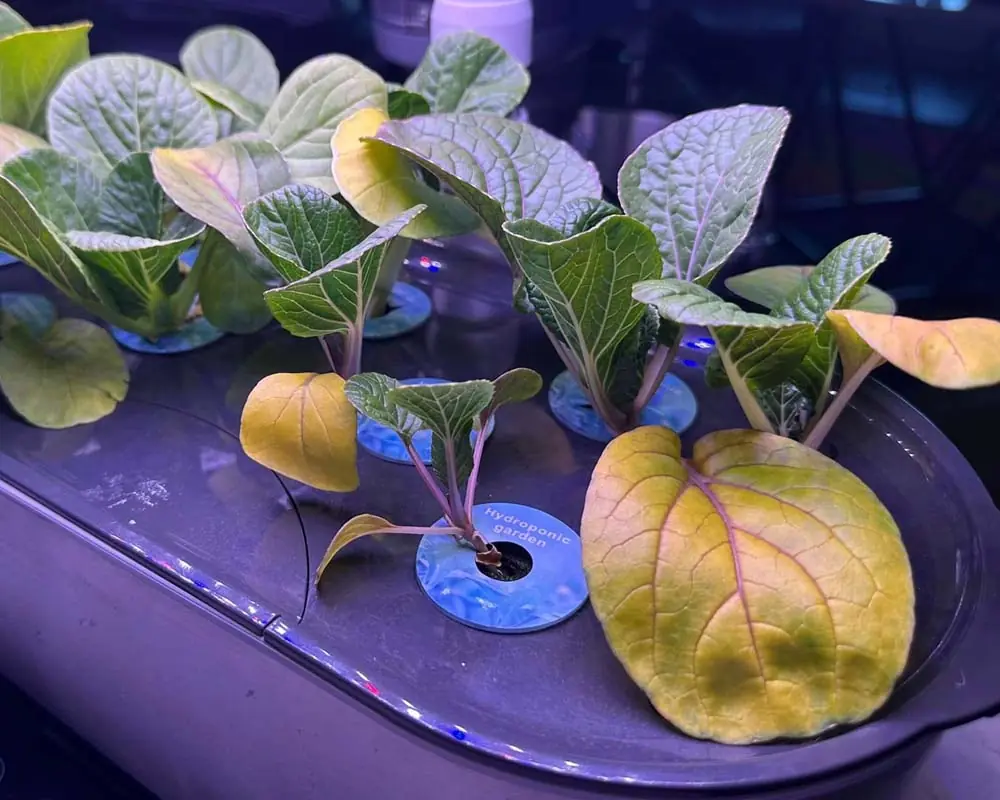
Nitrogen deficiency is perhaps the most common cause of yellowing leaves in hydroponic plants. This is hardly surprising, since nitrogen is the fundamental building block of chlorophyll, which gives leaves their green color.
How to identify it:
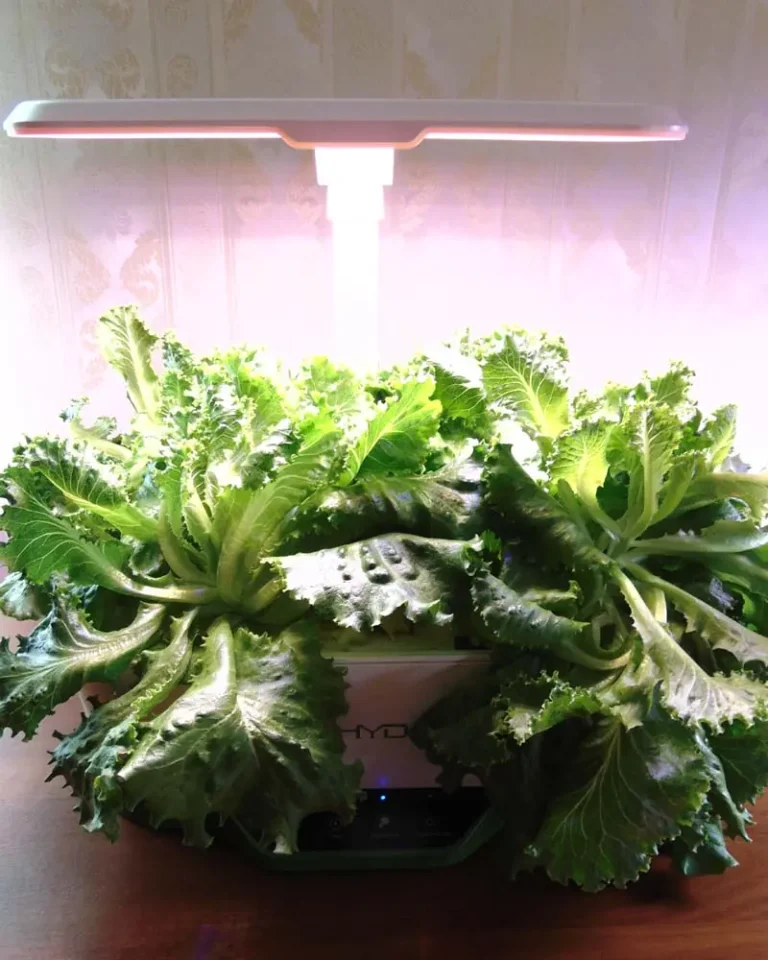
In my setup, I noticed the leaves of my bok choy turning yellow in the AeroGarden Bounty system. The process always begins with the lower, older leaves. They first turn a pale green and then yellow completely and evenly, including the veins.
At the same time, the upper leaves remain vibrant and green. This happens because the plant actively redirects its remaining nitrogen reserves from the older leaves to safeguard new growth. If left unchecked, the yellowing will move up the plant until the entire canopy collapses.
How I fixed it:
First, I checked the nutrient levels using my EC meter, which read 0.9 mS/cm. This is far too low for the vegetative stage, meaning the plant was simply starving.
I added a fresh dose of Flora Series nutrients, bringing the EC up to 1.8 mS/cm. Within a week, the new growth emerged with a rich, dark green color. The older leaves stopped yellowing further, and I safely pruned away the completely dead foliage.
💡 My Advice: If you see uniform yellowing starting from the bottom, check your EC immediately. For leafy greens, a normal range is 1.5–2.0 mS/cm, while fruiting crops like tomatoes, cucumbers, and peppers generally require 2.0–2.8 mS/cm.
(Note: Keep in mind that root rot can also trigger a secondary nitrogen deficiency, which I cover below).
Magnesium Deficiency
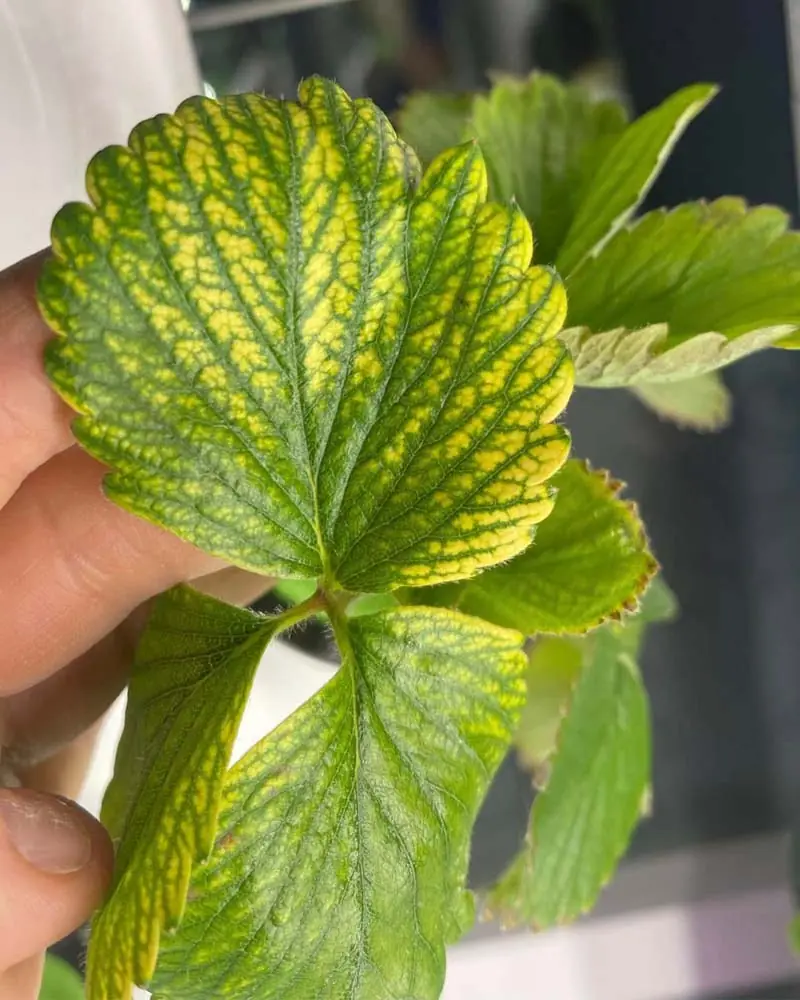
I ran into a severe magnesium deficiency while growing strawberries in a vertical hydroponic tower. This happened because I was using hard tap water with high baseline calcium levels. In this scenario, simply lowering the pH didn’t help; the sheer volume of calcium created a nutrient antagonist effect, physically blocking the strawberry roots from absorbing the magnesium present in my fertilizers.
Magnesium deficiency can also easily occur if your reservoir pH drops too low (under 5.3) or if you use pure reverse osmosis (RO) water without remineralizing it.
How to identify it:
Because magnesium is highly mobile, the plant pulls it from the lower and middle tiers to feed the fresh top growth. The classic visual signature is interveinal chlorosis: the tissue between the veins turns a bright, almost marbled yellow, while the structural veins themselves stay starkly dark green.
If you leave this untreated, the yellow areas will eventually develop dry, brittle spots of a light brown or grayish color.
How I fixed it:
I delivered a quick fix to my strawberries by adding hydroponic-grade magnesium sulfate (Epsom salt) at a rate of 0.1 oz (about 1 teaspoon) per 1 gallon of water. Within a few days, the mild chlorosis reversed, and the leaves regained their green color. I reapplied it during the next reservoir change, and the issue hasn’t returned.
💡 My Advice: Always double-check your pH before adding supplements. If it falls outside the optimal 5.5–6.3 range, correct it with pH Up or pH Down products first, as this alone can sometimes unlock the magnesium. If you grow with RO water and experience this, use a dedicated CalMag supplement according to the label instead of standalone Epsom salt.
Iron Lockout
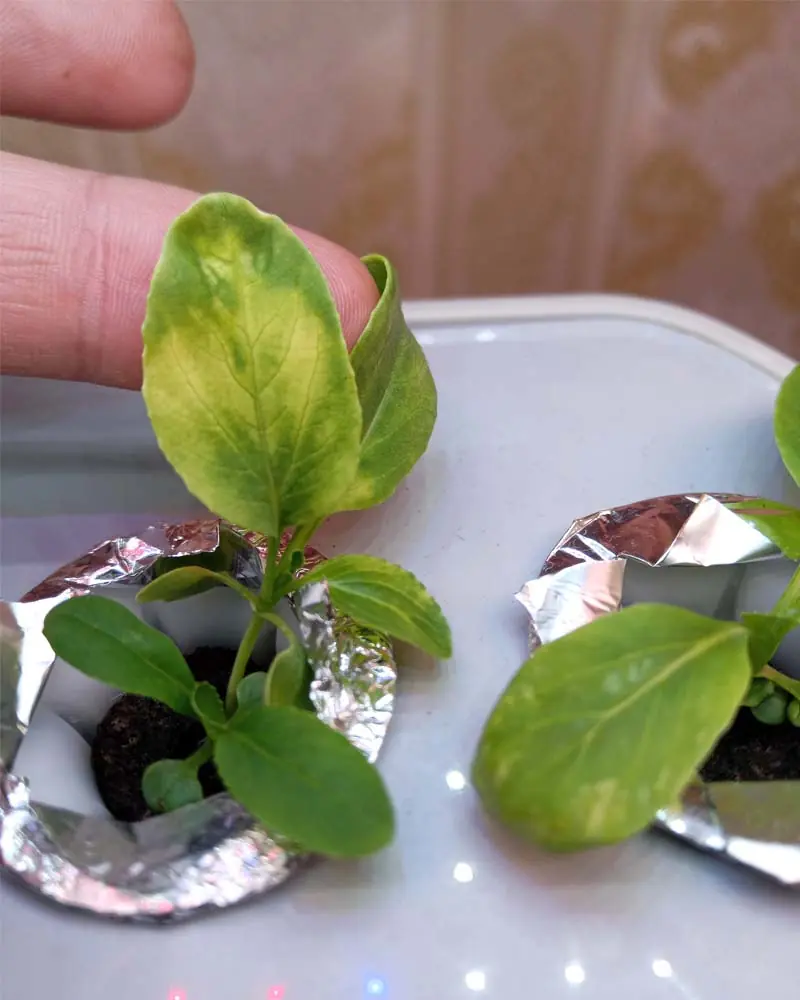
I encountered an iron lockout scenario with my bok choy seedlings. It turned out that an escalating pH level was the root cause. While I had carefully balanced the reservoir at the start of the cycle, my digital pH meter had drifted out of calibration without me realizing it.
Even though high-quality hydroponic fertilizers contain plenty of iron, it becomes chemically unavailable to the roots the moment the pH climbs above 6.5.
How to identify it:
Unlike nitrogen or magnesium, iron is an immobile element. Once bound in old tissue, it cannot be moved. Therefore, an iron deficiency shows up exclusively on the youngest, top leaves. The new growth turns a pale lemon-yellow while the veins remain green. The lower leaves stay perfectly healthy because they already secured their iron before the lockout occurred.
In advanced stages, the leaves turn almost bleached-white, develop necrosis, and the main growing tip dies.
How I fixed it:
The first step was recalibrating my pH meter and testing the water. It read 7.2, which is dangerously high for bok choy.
I added General Hydroponics pH Down to drop the level back to 5.8. I then added a half-dose of balanced fertilizer to replenish the nutrients that had precipitated out. The new leaves that emerged afterward were perfectly green.
💡 My Advice: Never rely blindly on an uncalibrated meter. I now make it a rule to double-check my digital readings using simple pH indicator strips at the start of every growth cycle. Keeping your reservoir between 5.5–6.3 is non-negotiable for keeping iron soluble.
Sulfur Deficiency
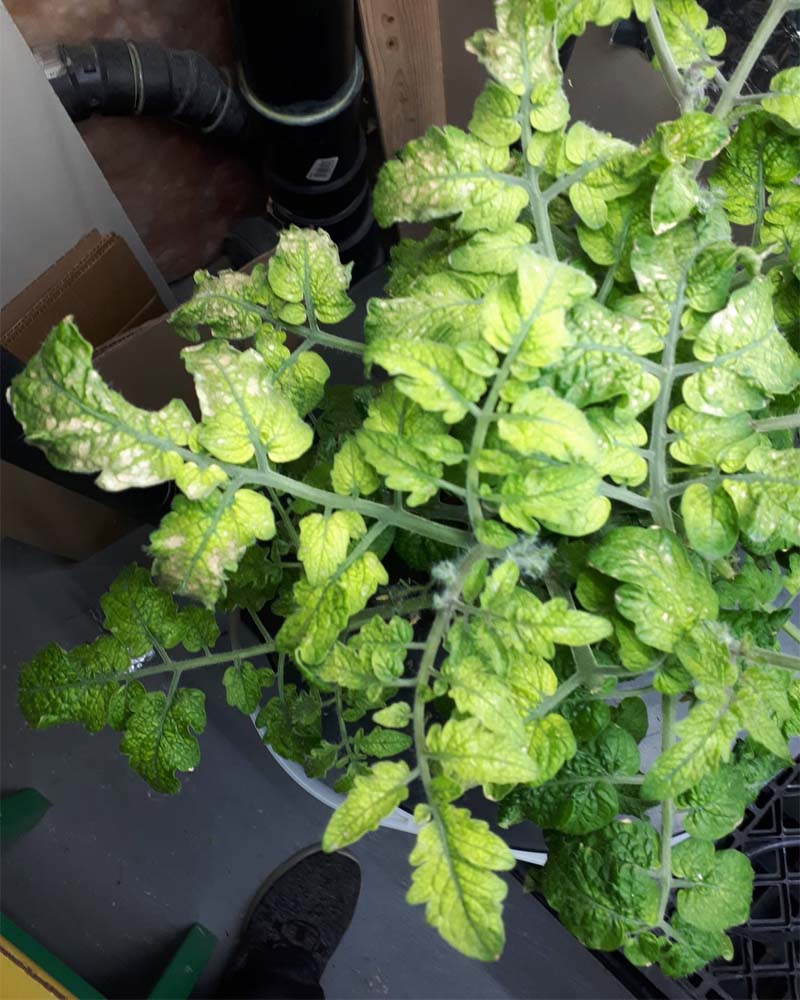
I managed to trigger a sulfur deficiency when I decided to grow a single tomato plant using pure reverse osmosis water. I failed to account for the fact that RO water is completely stripped of baseline minerals. To make matters worse, I was experimenting with a custom, self-mixed raw salt formula and miscalculated the sulfur ratios.
How to identify it:
Sulfur deficiency looks deceptively like a nitrogen deficiency, but with one massive catch: it attacks the top of the plant first. The new leaves and the upper canopy turn a uniform, pale yellow-green color, including the veins. There is no green-vein pattern like you see with iron. The bottom of the plant, meanwhile, stays green.
How I fixed it:
I immediately drained the experimental solution and refilled the reservoir with settled tap water adjusted to the correct pH. I then mixed in a complete commercial fertilizer with a verified sulfur profile. Within a few days, the pale leaves darkened, and all subsequent growth was deep green.
💡 My Advice: If you choose to grow with pure RO water, you must use a standard commercial buffer like CalMag or ensure your base nutrient line is specifically formulated for soft/RO water to avoid missing these crucial secondary macros.
Root Rot (Pythium)
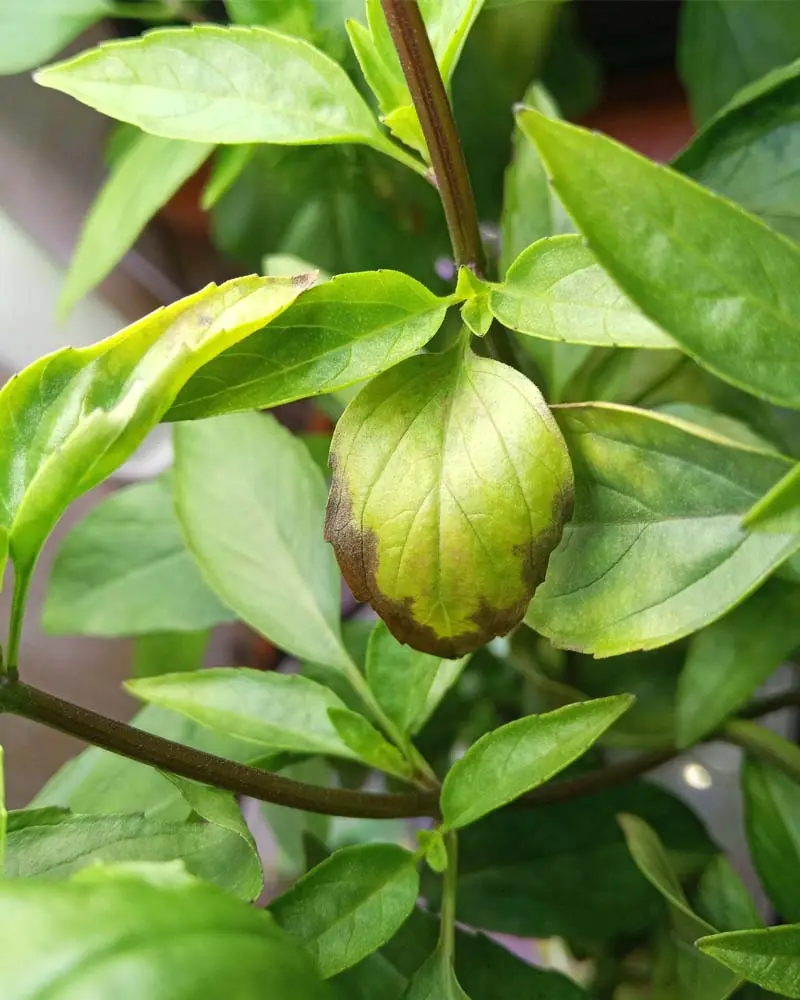
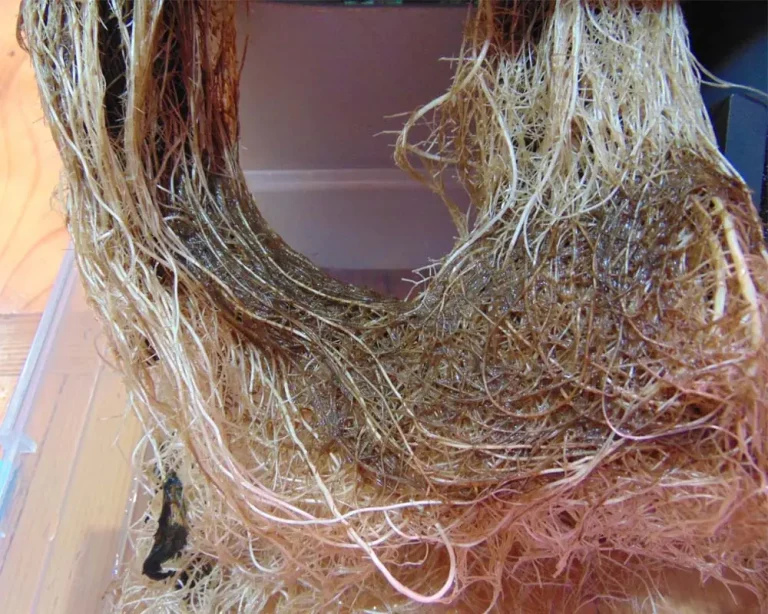
I’ve dealt with root rot more times than I care to admit, but one specific case with basil in my AeroGarden Bounty stands out. The system had an active air stone running, so I assumed aeration was covered. However, as the plant matured, growth ground to a halt and the leaves took on a bizarre color. When I opened the reservoir, the culprit was obvious: slime-covered, dark brown, mushy roots.
How to identify it:
Root rot doesn’t look like a clean nutrient deficiency. The entire plant begins to look dull and sickly, with random yellowing breaking out across different branches.
The definitive telltale sign is severe wilting and drooping, even though the roots are submerged in gallons of water. This happens because the decaying root system has lost the capacity to pump water or nutrients. Of course, the foul, swamp-like odor coming from the tank leaves no room for doubt.
How I fixed it:
Instead of throwing the plant away, I decided to test a biological approach. I introduced the beneficial bacteria Bacillus amyloliquefaciens to the reservoir.
Within just a few days, the bacteria began aggressively breaking down the organic root debris and outcompeting the pathogen. Brand new, bright white root shoots began bursting out from the old brown mass. The basil bounced back to life, and I managed to secure a fantastic harvest.
💡 My Advice: While beneficial bacteria are an incredibly simple and effective “lazy fix,” the absolute gold standard for root rot is prevention. Keep your reservoir water temperatures between 18–21°C (64–70°F). Warm water loses oxygen rapidly, creating the ultimate breeding ground for Pythium.
(Alternatively, you can go the sterile route: scrub the system down, trim away the dead roots, and cycle the system with a low dose of hydrogen peroxide before resetting).
💬 Need Help Diagnosing Your Hydroponic System? If the leaves on your plants are turning yellow and you can’t quite diagnose the cause, leave a comment below and attach a clear photo of both the leaves and your root zone. I’ll review it and help you get your system back on track!
Share This Post