
Over the years, my AeroGarden Farm 24 XL has hosted quite a variety of crops—but recently, it was time for jalapeños. In this guide, I’ll break down exactly how I grew these vibrant peppers and the specific steps I took to maximize the overall yield.
Setting Up the Farm 24 XL
I started by filling the reservoir with regular tap water. Because my local tap water sits at a alkaline pH of 7.8, I always condition it before sowing any seeds. The next day, once the water had settled, I gradually added pH-Down until the level dropped to an optimal 5.7.
Next came the nutrients. For this grow, I opted for the General Hydroponics Flora Series. I added 4 milliliters per gallon from each of the three bottles, using 24 milliliters of nutrients in total. After a quick stir, my EC meter read 1.6 mS/cm—the perfect baseline for starting jalapeños.
For the genetics, I purchased seeds from the Ferry-Morse website; they offer a great selection and highly reliable germination rates. I placed two seeds into each of the three growing sponges and set them into the Farm 24 XL. I only used one side of the dual-reservoir system for this project, as the other half was already occupied by cherry tomatoes.
To begin, I set the LED light panel to its lowest position and configured the timer to a 16-hour on, 8-hour off schedule. Throughout the entire lifecycle, I adjusted the panel upward as the plants grew, maintaining a strict 2–3 inch gap between the canopy and the lights.
The Vegetative Phase
On the 13th day, the seeds in the first sponge germinated, followed two days later by the second and third sponges. To give the young seedlings a boost, I added an extra 12 milliliters of fertilizer, which bumped the EC up to 2.0 mS/cm.
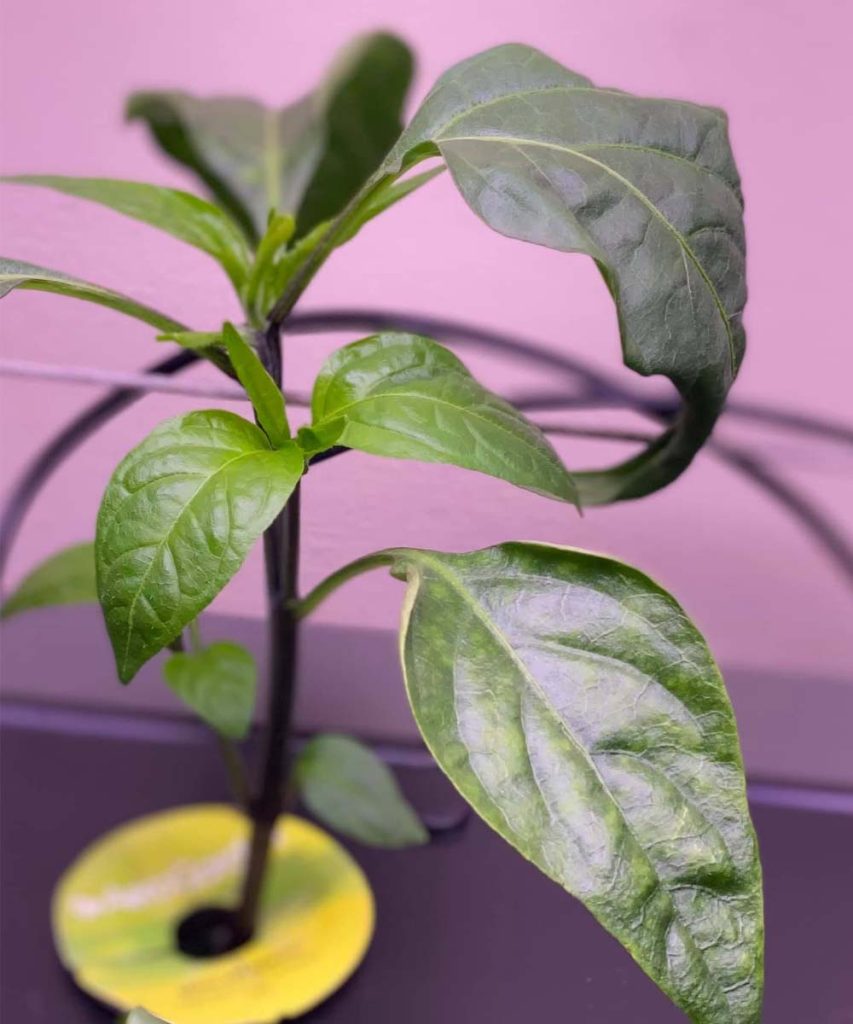
The peppers grew rapidly. By day 26, each plant boasted about a dozen leaves and stood just over two inches tall.
Growth Tip: Monitoring your parameters daily is the secret to avoiding deficiencies before they start.
I checked the pH and EC every single day, using pH-Down and distilled water to keep the pH strictly below 6.0 and the EC stable at 2.0 mS/cm. This proactive maintenance completely prevented leaf yellowing and stunted growth.
Interestingly, I never performed a full reservoir change or cleaned the pump during the entire cycle. I simply topped off the reservoir with fresh, conditioned water whenever the level dropped below the halfway mark.
Shaping and Pruning
After a month of growth, the plants had shot up to about 10 inches. Because the foliage was getting top-heavy and one of the plants was beginning to lean, I installed the AeroGarden trellis system for structural support.
At this point, I also decided to prune the canopy:
- Lower Growth: I stripped away the small, low-lying branches that weren’t receiving light and served little purpose.
- Main Framework: I left the strong, structural branches completely untouched to support the future heavy fruit load.
- Outliers: I trimmed back a few wayward branches extending past the edges of the system to prevent the footprint from becoming too dense.
Within a few days of pruning, a burst of healthy new shoots emerged.
The Flowering Phase
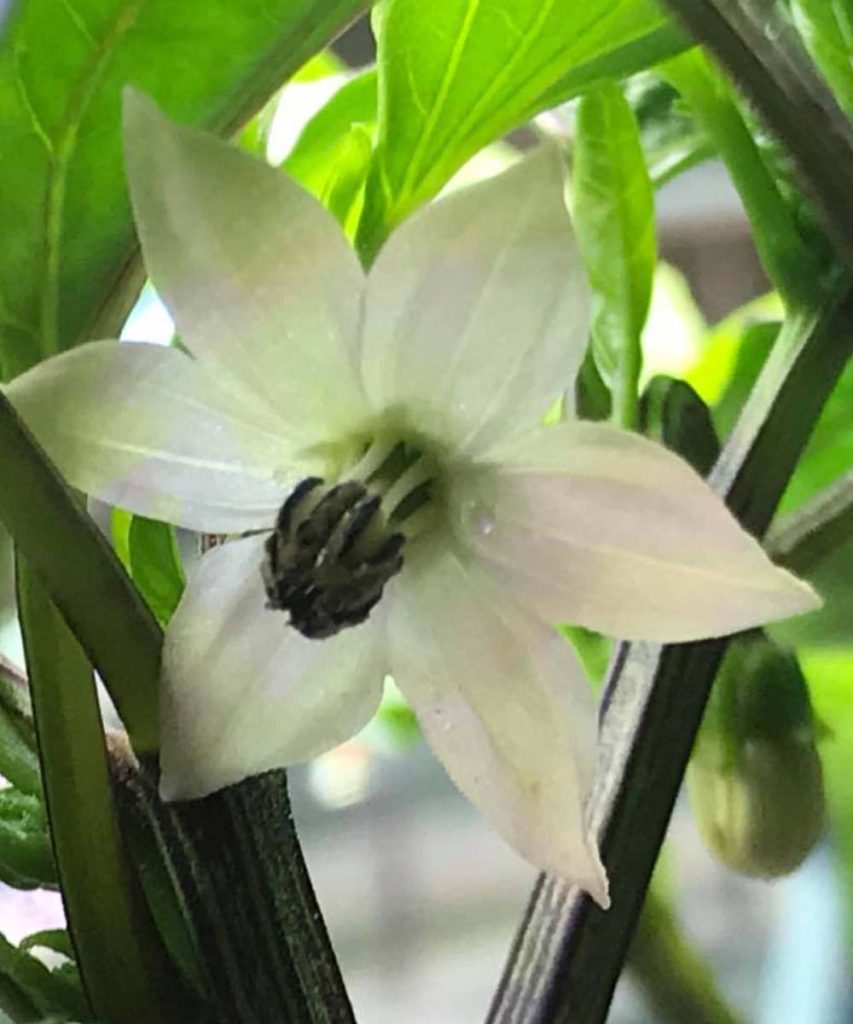
Toward the end of the second month, the jalapeños began to bloom. The largest, most dominant plant flowered first, with the two smaller plants following close behind.
Because indoor setups lack natural wind and pollinators, I grabbed a small paintbrush and got to work. I gently brushed the inside of each bloom to distribute the pollen. I repeated this process three separate times as new waves of flowers appeared.
During this stage, I introduced CalMag to the reservoir. It’s an excellent supplement that wards off blossom end rot and boosts flowering performance. This addition pushed my EC up to 2.2 mS/cm.
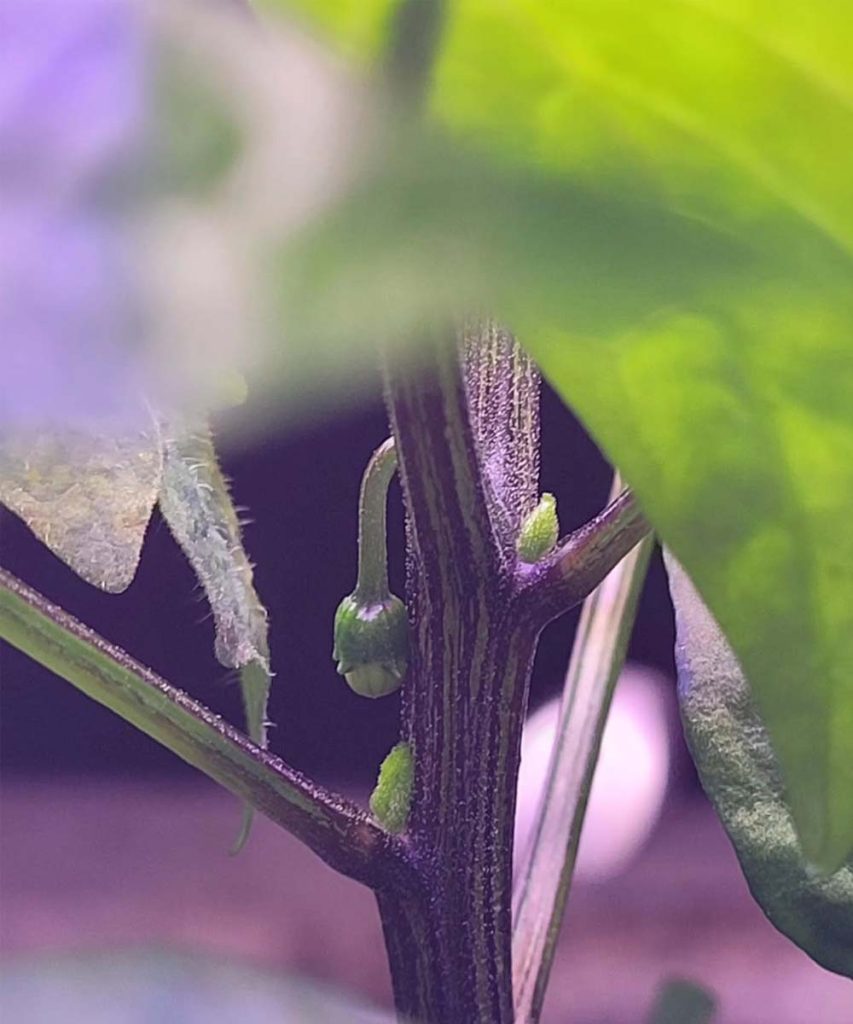
On day 79, I spotted the very first baby pepper. To support heavy fruit production, I increased the nutrient concentration by adding 4 milliliters each of the Gro and Bloom formulas, bringing the EC to 2.4 mS/cm.
Challenges & Troubleshooting
The primary challenge I faced during this grow was water consumption. The room housing the AeroGarden got quite warm, which caused the plants to drink at a much faster rate.
During a busy week, I fell behind on maintenance and forgot to top off the reservoir. I caught the issue when the leaves began to droop significantly. Fortunately, after an immediate top-off, the plants bounced right back without any permanent damage.
To mitigate other environmental risks, I implemented two helpful modifications:
- Root Health: I placed an extra air stone in the tank connected to an aquarium air pump on a timer to keep the water highly oxygenated and prevent root rot.
- Air Circulation: I set up a small oscillating fan on a timer near the unit. This strengthened the stems, prevented fungal diseases on the leaves, and kept the water temperature perfectly regulated.
The Harvest
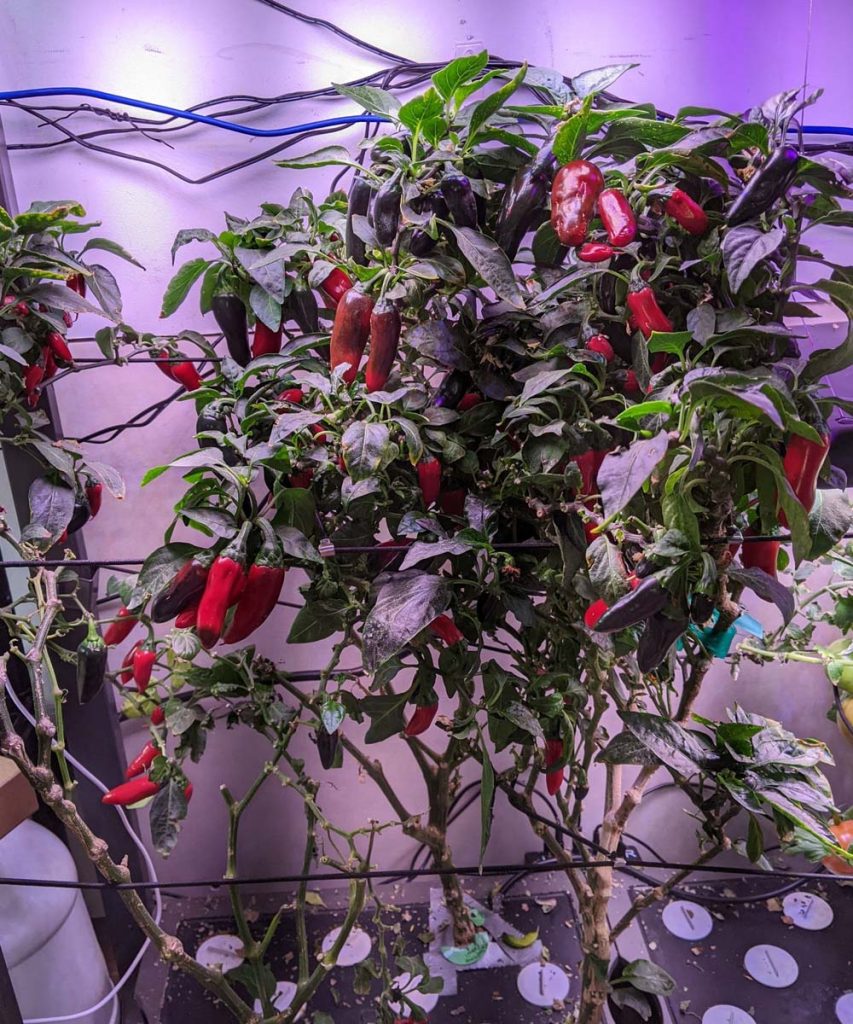
At the start of the fourth month, the first batch of jalapeños reached peak maturity, and I picked my very first harvest. Over the following month, I went back for two more major pickings.
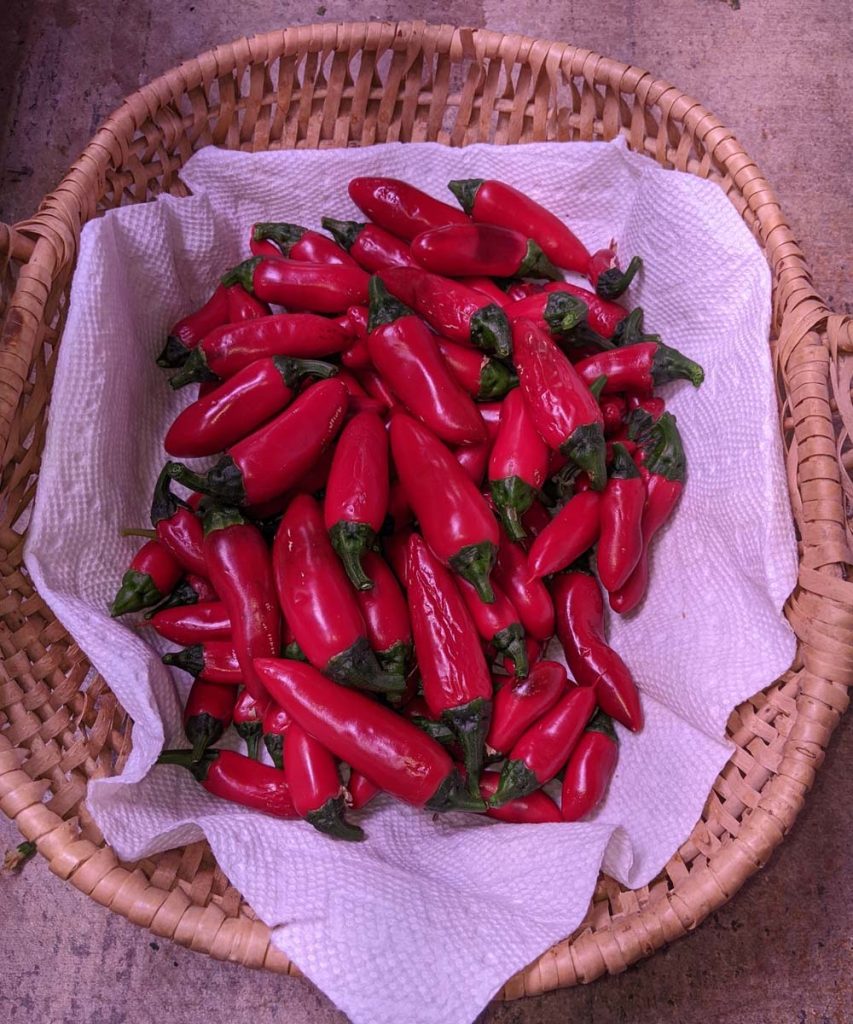
In total, the three plants yielded 93 jalapeños, weighing in at a whopping 5.2 pounds.
Costs vs. Results
|
Item |
Quantity |
Cost |
|---|---|---|
|
Electricity |
185 kWh |
$31.40 |
|
Nutrients |
190 ml |
$19.00 |
|
Water & Additives |
Tap water, pH-Down, Sponges |
$1.50 |
|
Total Cost |
$51.90 |
My total expenses for the 5-month cultivation cycle came out to $51.90. Breaking it down, each pound of homegrown, fresh jalapeños cost me roughly $9.90.
What do you think? Is it worth it to grow jalapeños hydroponically at home, or would you stick to the grocery store? Share your thoughts and your own hydroponic experiences in the comments below!
Share This Post