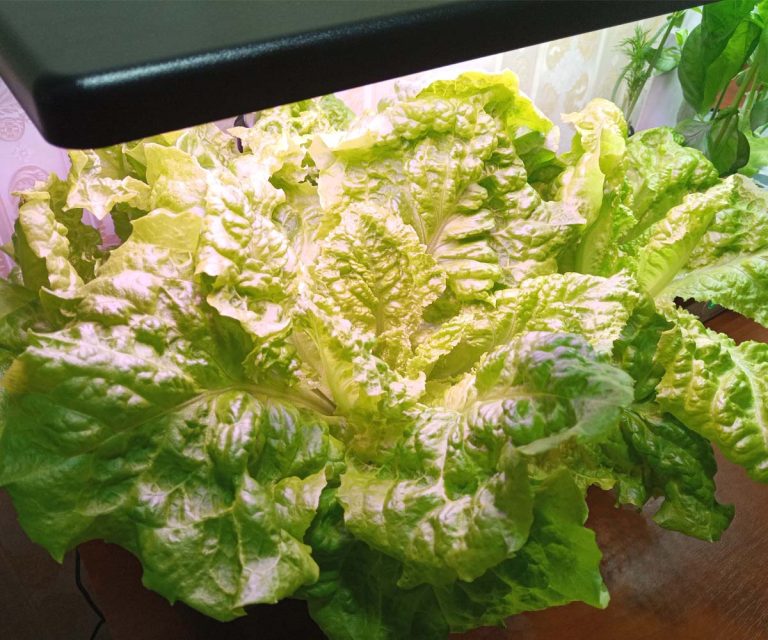

When I first bought my Tower Garden, I mostly stuck to growing small greens and herbs. But eventually, I wanted to push the system to its limits and see what it was truly capable of handling—so I planted eggplants.
Below is a detailed, step-by-step breakdown of exactly how I managed this high-yield project from seed to harvest.
Seed Selection and Germination
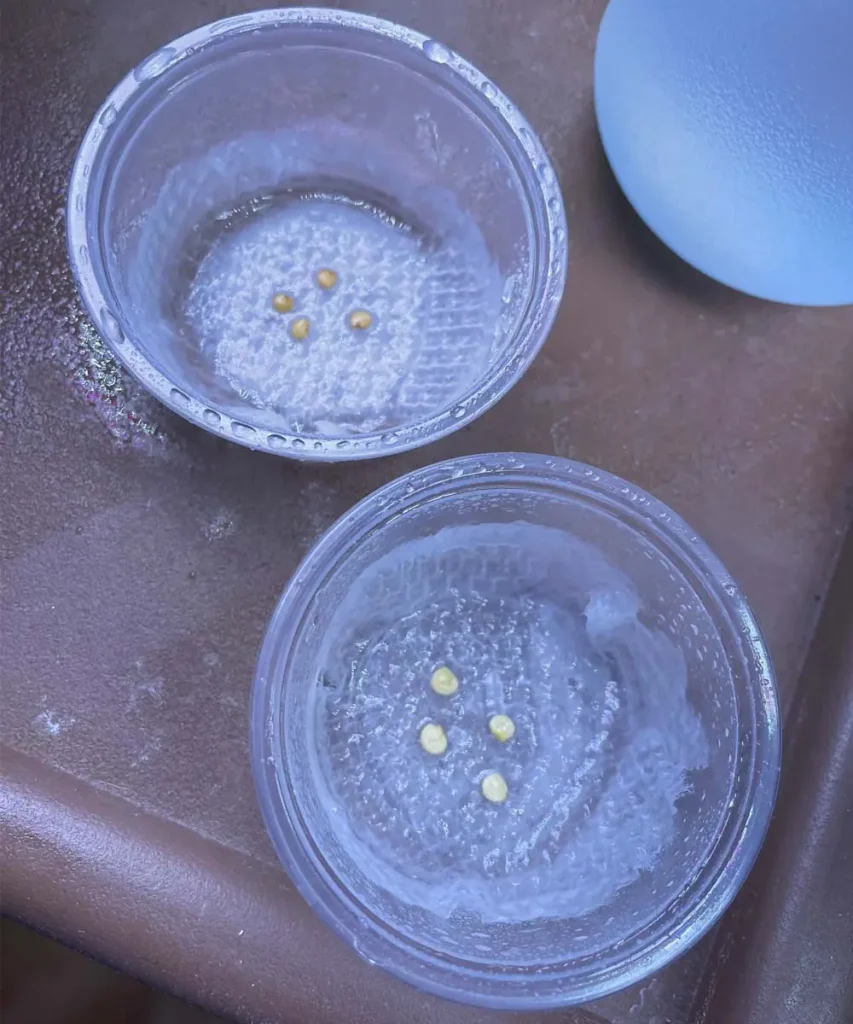
I started by hunting down the perfect variety. After browsing a website with an excellent seed selection, I settled on the Nigral eggplant for its deep, glossy look.
To kickstart germination, I placed four Nigral seeds onto a moist paper towel inside clear plastic cups, alongside some tomato and basil seeds I was starting at the same time.
As soon as the seeds sprouted their initial taproots, I carefully transferred each one into a pre-moistened rockwool cube with a small starter hole. I sprinkled a light layer of vermiculite over the seeds to lock in moisture and placed the cubes into seedling trays.
For the next two weeks, care was simple: keeping the grow media consistently moist and warm.
The Growth Phase
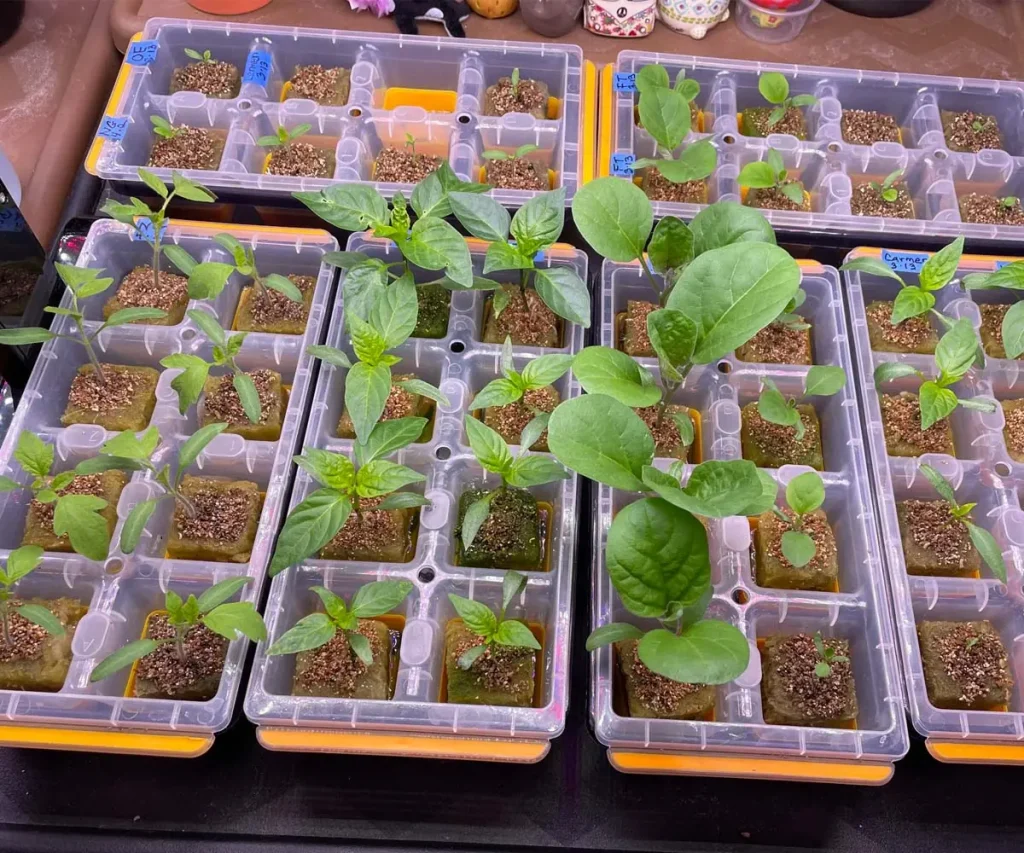
By day 15, the seedlings had put on impressive growth, boasting several true leaves each. They were officially ready to graduate to the Tower Garden.
The day before transplanting, I filled the reservoir with water to let it settle. Next, I balanced the water chemistry. Using my Aqua Master Tools P50 Pro, I monitored the levels and used pH-Down to bring the reservoir to a stable 5.6.
For nutrients, I turned to the General Hydroponics FloraSeries, adding 4 mL per gallon from each of the three bottles (Gro, Micro, and Bloom). This brought my initial EC reading to a modest 1.4 mS/cm—perfect for young plants.
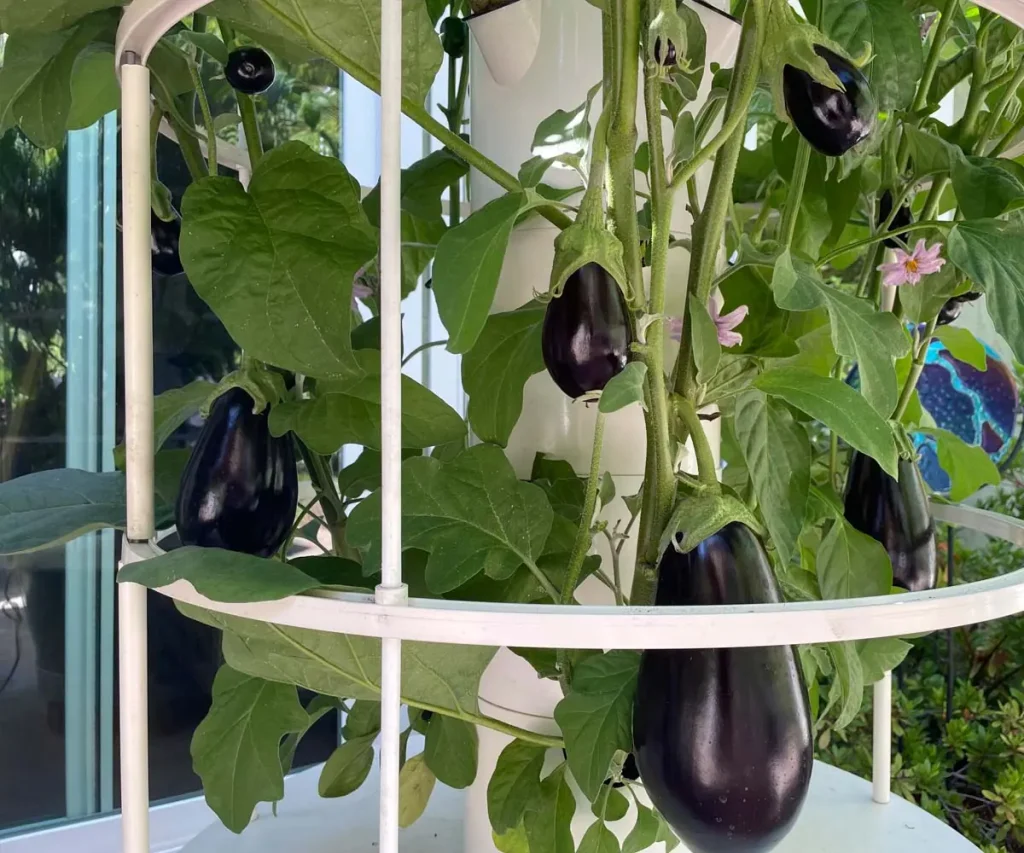
I positioned the Tower Garden in a prime outdoor spot that received 10 hours of direct sunlight daily, as eggplants absolutely love the heat. I then inserted the rockwool cubes into the lower ports of the tower in a circular pattern, giving the heavy plants plenty of room to grow upward.
Because my system is equipped with a trellis cage, the expanding stalks had structural support to lean on, though I still tied them up regularly as they gained weight.
From there, the growth rate exploded. Within three weeks, the tower was completely covered in massive, vibrant leaves, and the plants began drinking water at an incredible rate. I checked the pH and EC levels daily, making immediate adjustments whenever they drifted.
Pollination and Fruiting
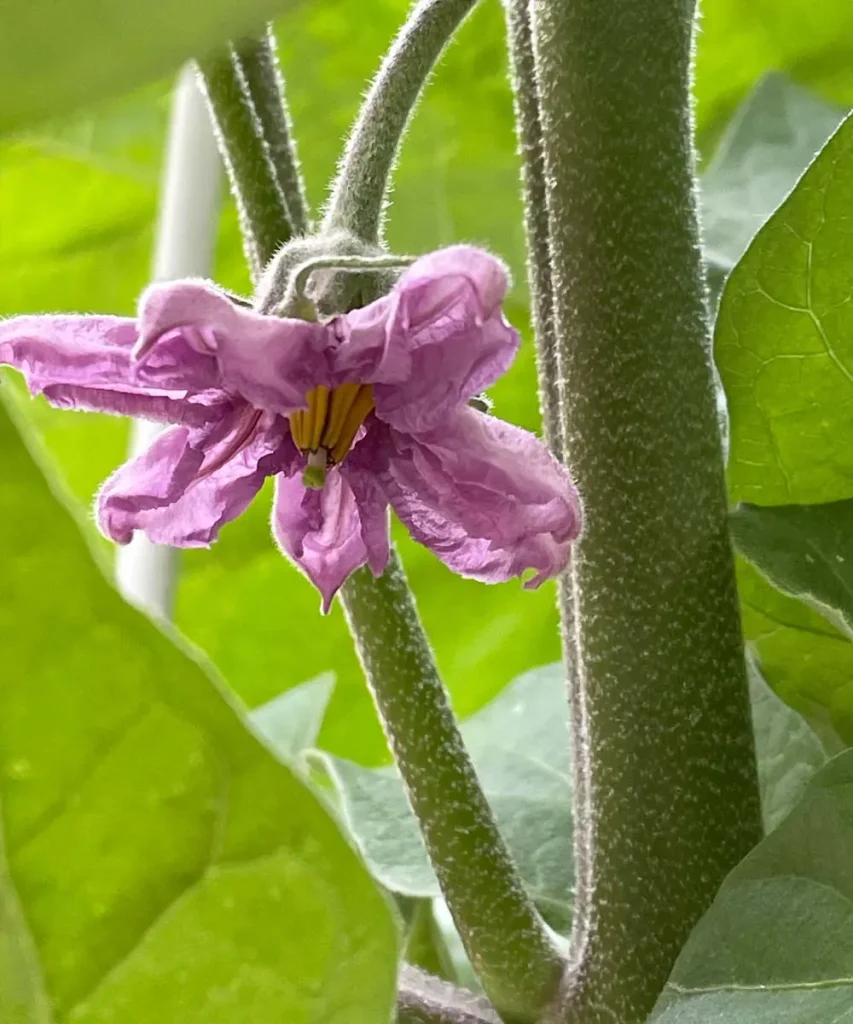
On day 47, the first light-purple flowers opened up. It is incredibly rewarding to watch a project transition from a tiny seed into a flowering plant.
A Note on Pollination: Because this was an outdoor setup, I didn’t need to hand-pollinate the flowers. Local bees and beneficial insects took care of the work for me, saving me a daily routine task and ensuring an excellent fruit set.
The arrival of blooms meant it was time to shift the nutrient strategy. I adjusted the FloraSeries ratio, dropping the “Gro” bottle completely and using only Micro and Bloom. This adjustment is crucial: it slows down aggressive leaf and stem elongation, directing the plant’s energy into flowering and fruiting instead. With this change, I bumped the target EC up to 2.2 mS/cm.
Right around the end of the second month, I spotted the first tiny, glossy eggplant emerging from its calyx. Even though it wasn’t ripe yet, it was a massive milestone. To support the heavy fruit production, I gave the system one final nutrient boost, driving the EC up to 2.8 mS/cm.
The Harvest
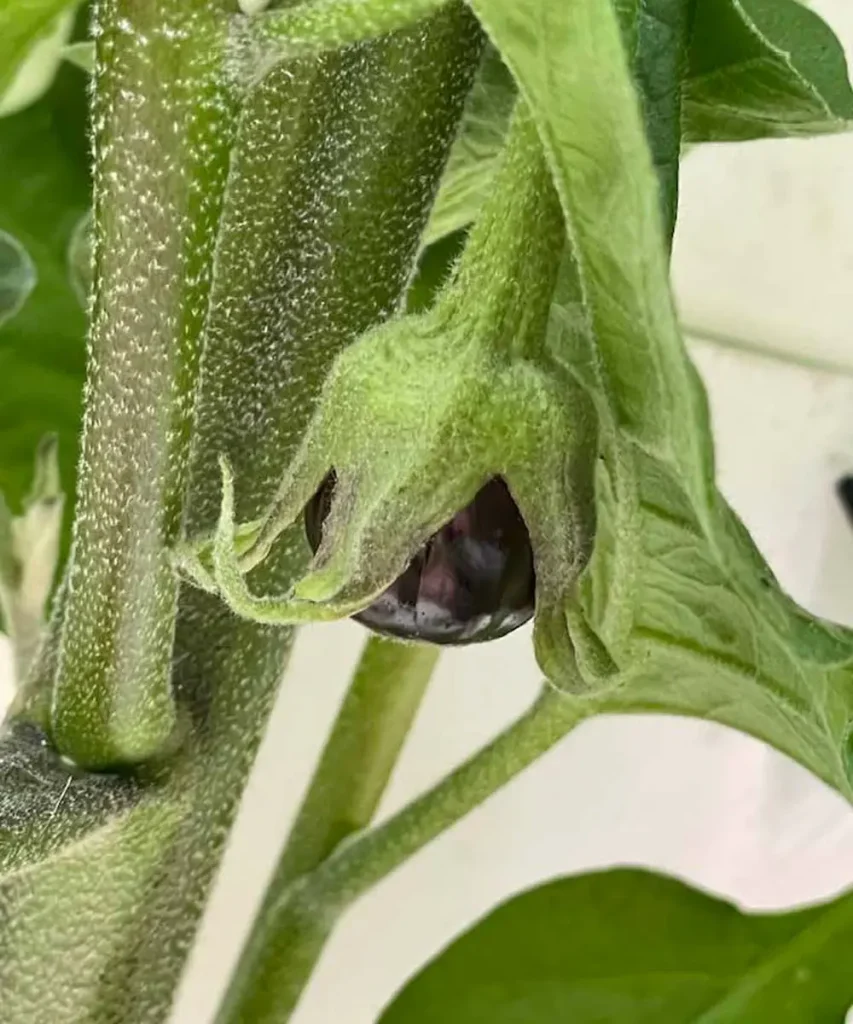
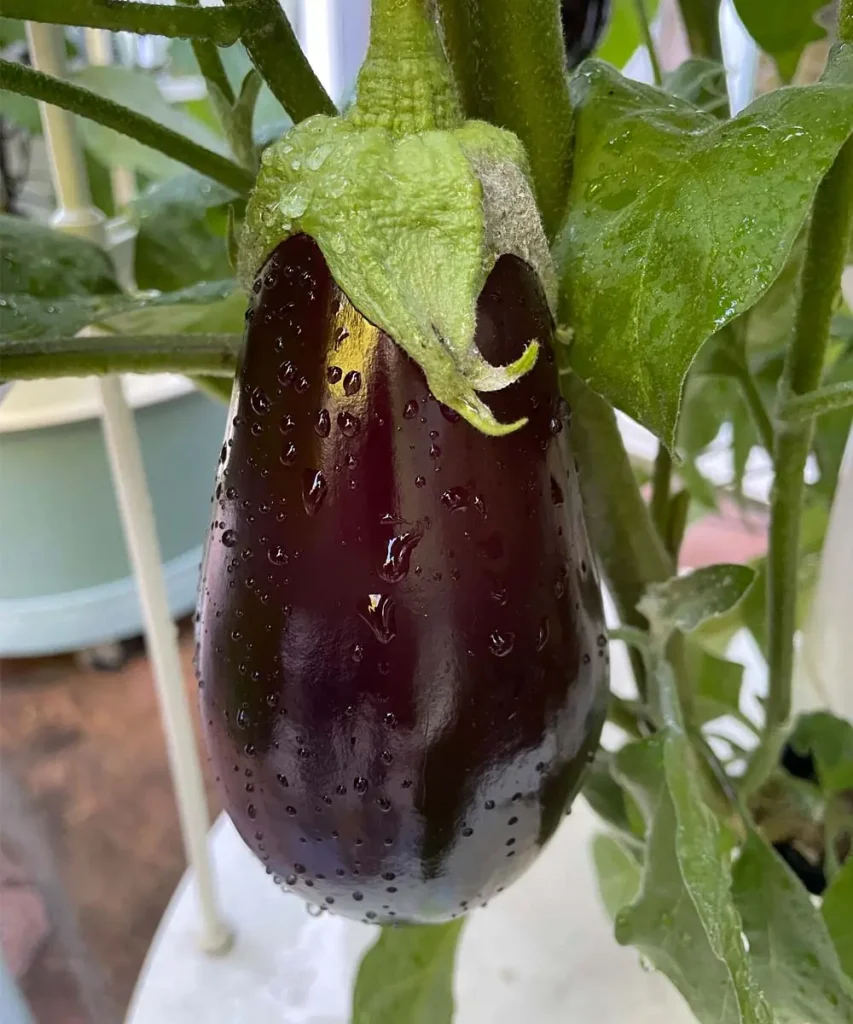
By day 72, the first few eggplants had reached full size. To ensure they were perfectly ripe and not under- or over-mature, I used the tactile “thumbprint” test. Pressing gently into the skin, the flesh left a slight indentation that slowly recovered—the universal sign of a perfectly tender eggplant.
Over the next month, the yields were outstanding. Even into the fourth and fifth months of cultivation, the four plants on the tower showed no signs of stopping, continuously pushing out new flushes of fruit.
Costs vs. Results
|
Item |
Quantity |
Cost |
|---|---|---|
|
Electricity |
16.5 kWh |
$2.81 |
|
Nutrients |
2025 ml |
$20.00 |
|
Water & Additives |
Tap water, pH-Down |
$5.20 |
|
Total Cost |
$28.00 |
Over a five-month growing window, I harvested a grand total of 53 full-sized eggplants (plus a few smaller, late-season ones) from just four plants.
The total weight of the harvest came out to a whopping 63.6 pounds! Breaking down the numbers, my total operating cost was $28.00, meaning these fresh, homegrown Nigral eggplants cost me just $0.40 per pound to grow.
What do you think of this vertical gardening experiment? Have you ever tried growing heavy, fruiting crops in a soil-free system? Share your thoughts and questions in the comments below!
Share This Post