
When I first thought about growing zucchini in my AeroGarden Farm 12 XL, I wasn’t entirely sure it would work. Zucchini plants are notorious space-hoggers with massive root systems and giant fan leaves. However, my curiosity got the better of me, and I decided to drop the seeds anyway.
Here is exactly how the experiment turned out, from seed to the final cost-per-pound breakdown.
Setting Up and Germination
After thoroughly deep-cleaning the system to remove any residue accumulated from my previous grow, I started the new project. I filled the reservoir with regular tap water (baseline pH of 7.5) and let it sit for 24 hours to dechlorinate.
The next day, I added a small amount of pH-Down, mixing it thoroughly until the pH dropped to a stable 5.8.
For nutrition, I chose Plagron nutrients (Components A and B), adding 8 milliliters of each component per gallon of water. After mixing, my EC meter read 1.5 mS/cm—an excellent starting point for early vegetative growth.
My ultimate goal was to grow only one plant to give it maximum room on the deck, but I played it safe and started two seeds just in case. I lowered the LED light panel to its lowest position and set the timer.
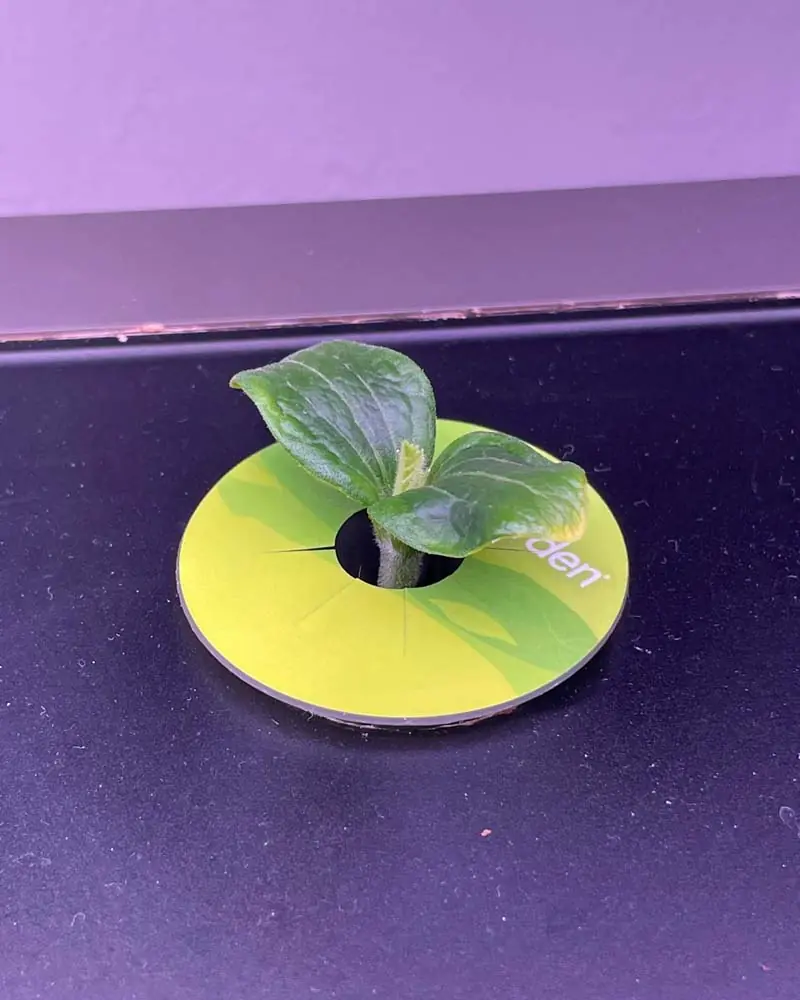
On the seventh day, a strong stem emerged with a split seed casing at the top. Two days later, the zucchini leaves fully opened. Because both had germinated successfully, I immediately removed the backup seed pod to let the primary plant take over.
Read also: My Experience Growing Parsley in the AeroGarden Harvest
Managing the Vegetative Explosion
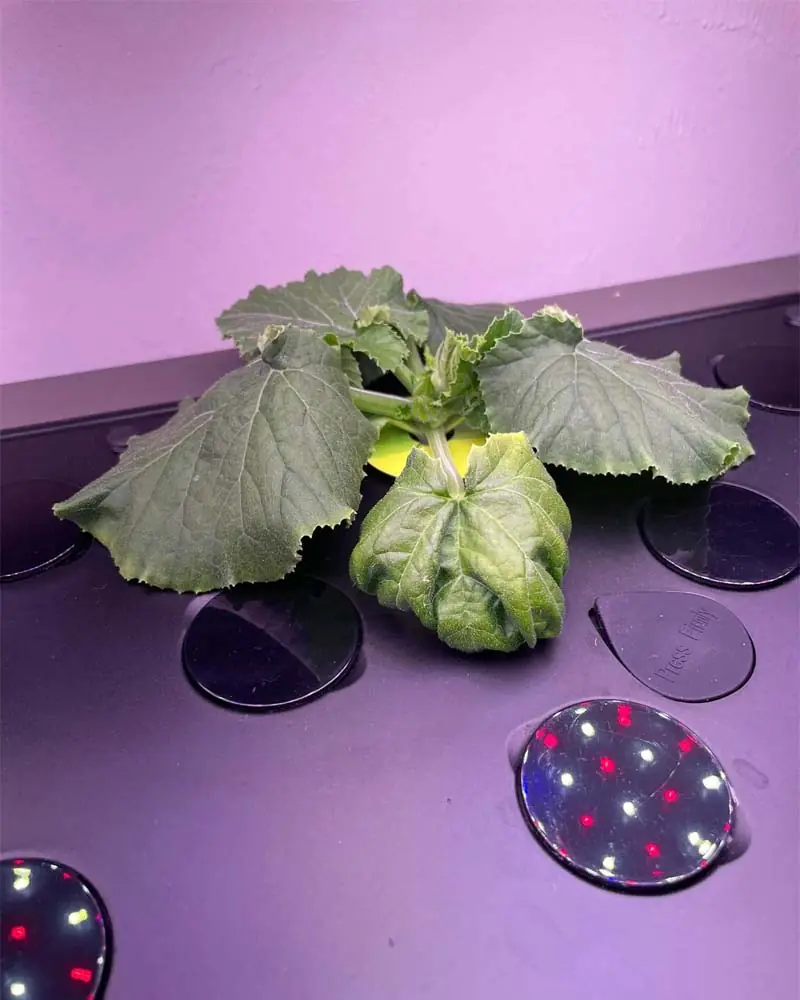
By Day 21, the zucchini had developed five massive, fully formed leaves and was rapidly picking up speed. At this point, I gave the reservoir a heavy nutrient dose, bumping the EC up to 2.6 mS/cm. The plant responded with an aggressive growth spurt.
Throughout the entire cycle, I monitored the EC and pH daily, correcting any fluctuations immediately. To prevent stagnant air and leaf issues, I set up a small fan on a timer to clear excess humidity from the canopy. The auxiliary air stone in the tank worked perfectly, keeping the roots highly oxygenated and completely free of root rot.
Note on Maintenance: I chose not to do any full reservoir resets or system flushes during this entire run; I simply topped off the water and added fresh nutrients as needed. I also refrained from pruning any leaves to see how the plant would manage its own canopy.
Within two weeks, the plant grew so large it was practically unrecognizable.
Read also: Growing Sweet Bell Peppers in the AeroGarden Farm 24 XL
The Blooming Phase
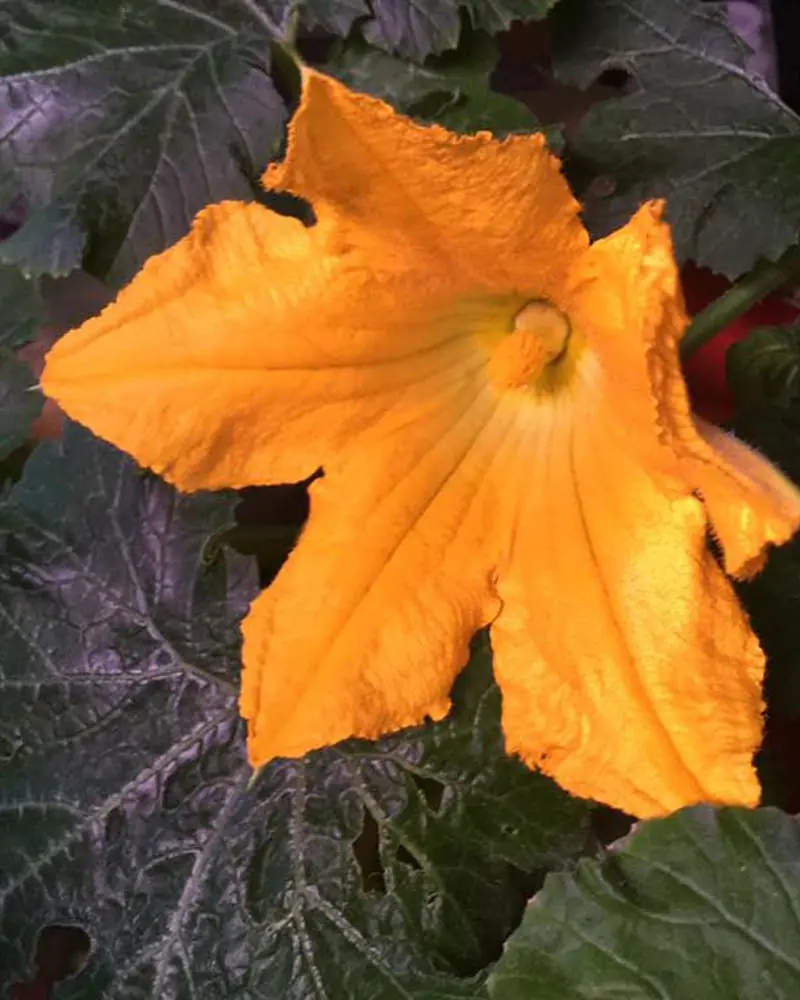
On Day 35, the first bloom opened, signaling it was time to step in as the pollinator. Zucchini plants produce separate male and female flowers; the male flowers sit on long, thin stems, while female flowers feature a distinct, miniature fruit bud right at their base.
Once I had a reliable mix of both blooms open at the same time, I clipped a male flower, carefully trimmed away the petals with scissors to expose the pollen-heavy anther, and gently swabbed it against the center of each female flower.
Supported by the oscillating fan, this manual method resulted in a nearly 100% pollination success rate. I added a final dose of bloom nutrients at this stage to help the developing fruit swell.
Read also: My Journey Growing Tiny Tim Tomatoes in DIY DWC Hydroponics
The Harvest
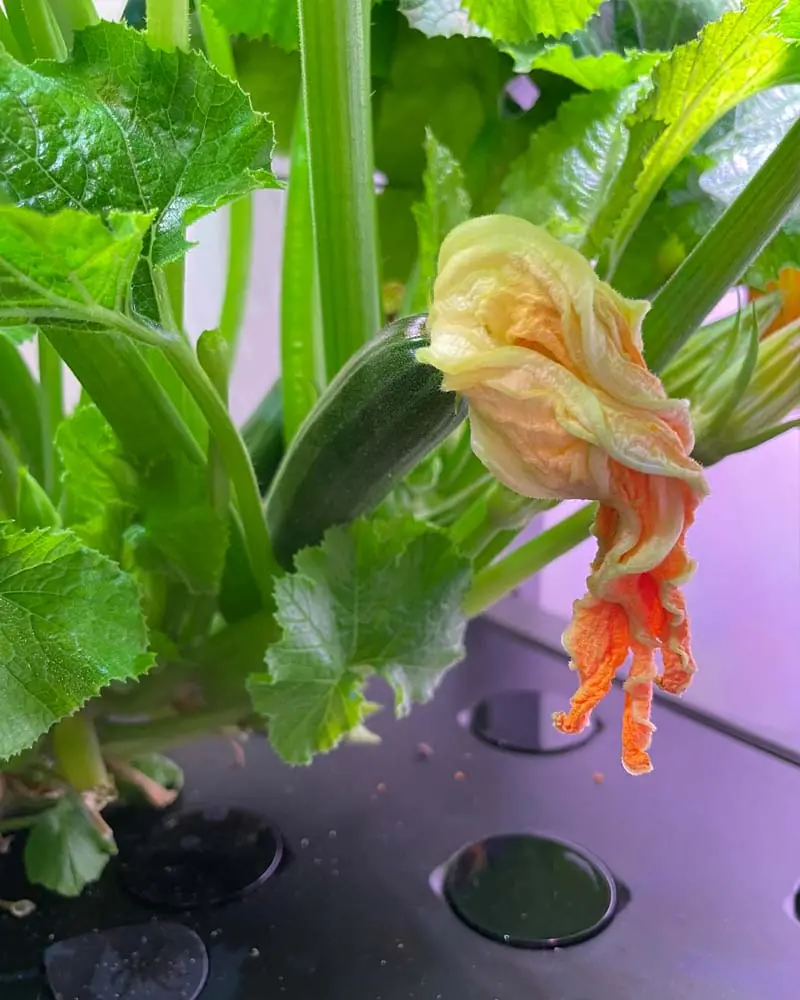
By Day 44, the first few zucchinis were already substantial. However, I decided to leave them on the vine a bit longer out of pure curiosity, wanting to see just how large a hydroponic squash could get at room temperature.
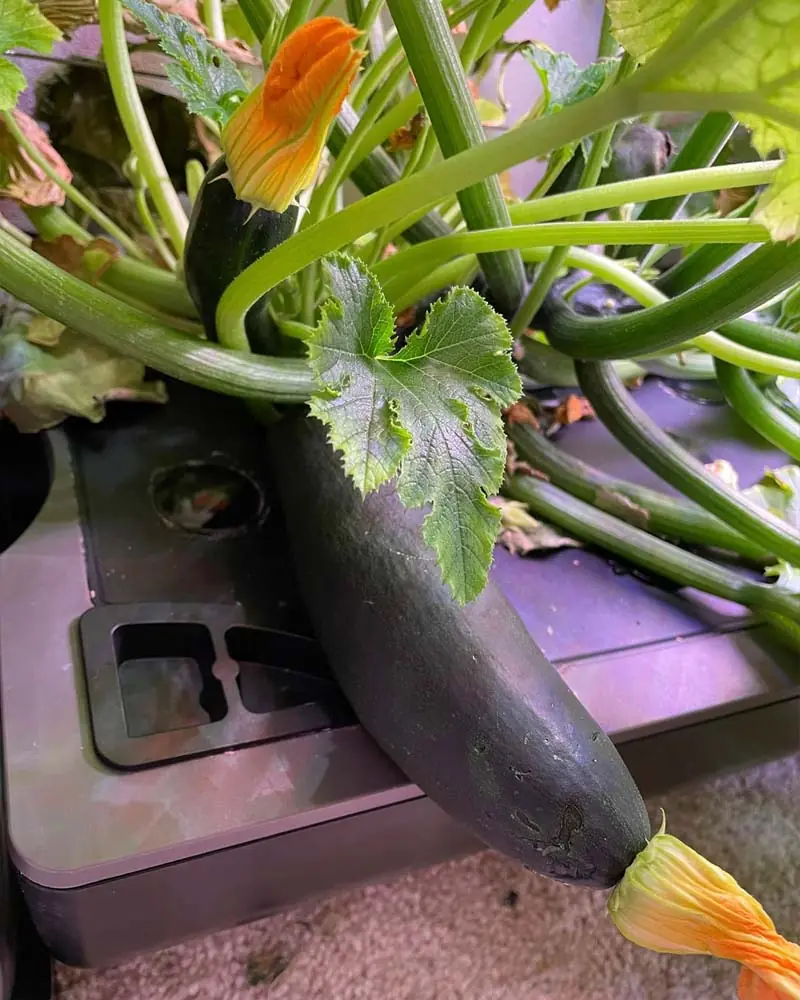
On Day 56, the first fruits reached peak maturity. I harvested two massive zucchinis on the first day and continued to pick the remaining fruits gradually as they ripened over the following days.
- Total Weight: 6.2 lbs (approx. 2.8 kg)
- Total Yield: 11 fruits
Costs vs. Results
To see if this indoor experiment made financial sense, I tracked my primary inputs throughout the growth cycle:
|
Item |
Quantity |
Cost |
|---|---|---|
|
Electricity |
67 kWh total (LED panel, air pump, fan) |
$11.39 |
|
Nutrients |
120 ml total |
$0.67 |
|
Water & Additives |
Tap water, pH-Down |
$0.40 |
|
Total Cost |
$12.46 |
The total operating cost for the project came out to $12.46, meaning each pound of homegrown indoor zucchini cost roughly $2.00 to produce.
Do you think the harvest was worth the investment? Share your thoughts and your own indoor gardening setups in the comments below!
Share This Post